
Back Ionization in Powder Coating: Causes & Fixes | Powder-X
Back Ionization in Powder Coating: What It Looks Like and How to Stop It
Ever notice tiny craters, pinholes or rough patches appearing while applying powder coating?
The powder may be flowing correctly, the part may be clean, and the gun may seem to be working perfectly.
But something still isn't right.
The problem could be back ionization, an electrostatic issue that can interfere with how powder deposits on the surface.
Back ionization is one of those powder coating problems that can frustrate even experienced operators because the solution isn't always to spray more powder.
In fact, spraying more can make the problem worse.
At Powder-X, understanding what's happening during application is an important part of producing consistent, professional finishes.
What Is Back Ionization in Powder Coating?
Back ionization happens when excessive electrical charge builds up in the powder layer during electrostatic spraying.
Normally, the powder gun charges the powder particles, helping them move toward and stick to a grounded metal part.
But as the coating builds, the powder layer becomes increasingly resistant to additional charge.
If the electrical field becomes too intense, localized electrical discharges can occur through the deposited powder.
Think of it like trying to force more air into an already overinflated balloon. Eventually, the pressure needs somewhere to go.
With powder coating, that electrical discharge can disrupt the powder layer and create visible defects.
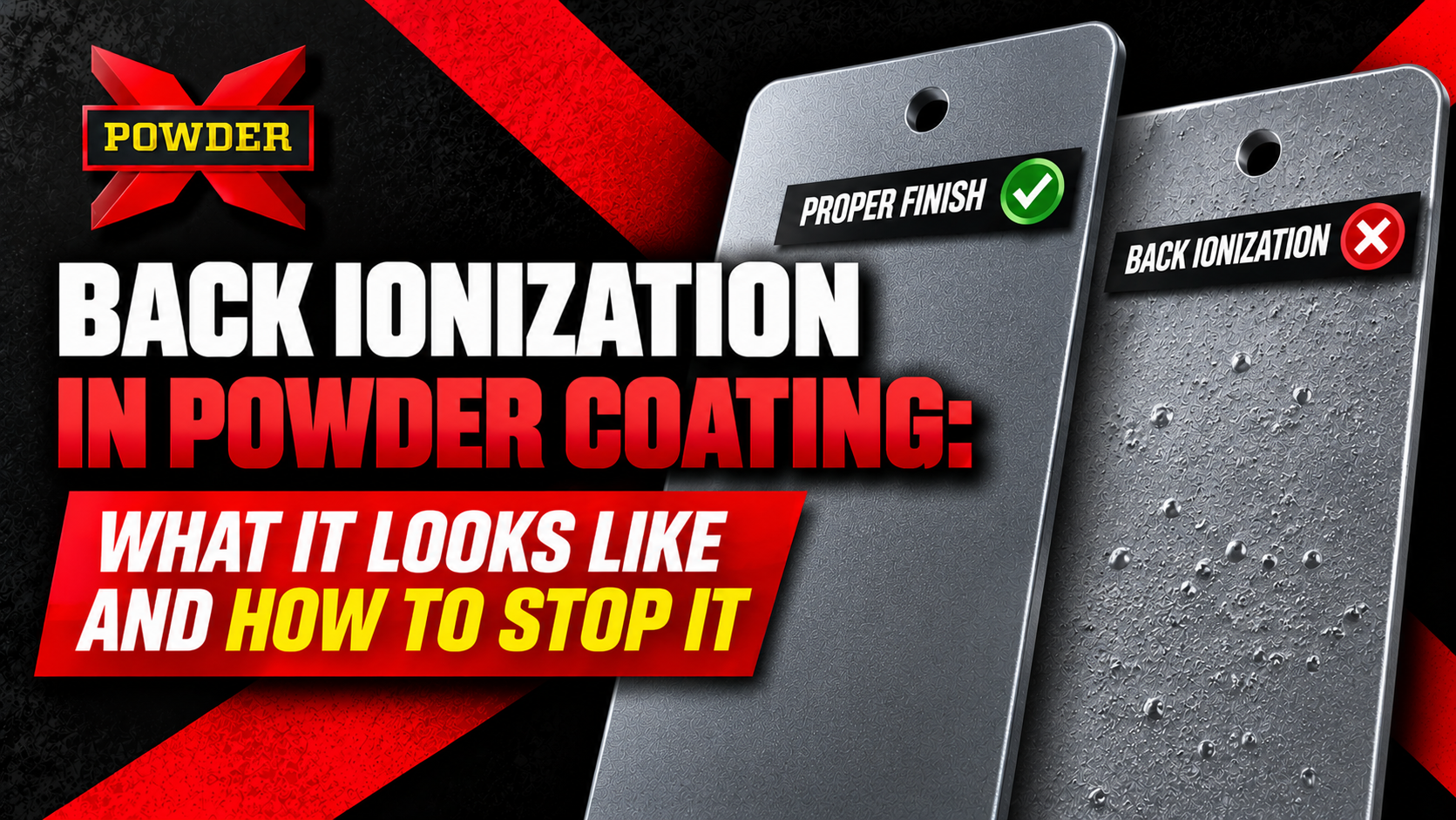
The result is a coating that may look rough, uneven or cratered before it ever enters the oven.
What Does Back Ionization Look Like?
Back ionization can create several noticeable application problems.
Operators may see small craters, pinholes or a rough, uneven powder surface. In some cases, powder may appear to repel from certain areas instead of building evenly.
The finish can develop a textured appearance that becomes more noticeable after curing.
These defects are often associated with areas where powder has already accumulated heavily.
However, not every crater or pinhole is caused by back ionization.
Contamination, outgassing and other application problems can produce similar-looking defects.
The key is identifying when the problem develops and what happens when the spray settings change.
1. Excessive Gun Voltage
One of the most common contributors to back ionization is excessive electrostatic voltage or current.
Higher settings can help powder deposit under certain conditions, but more electrical charge isn't always better.
As the coating builds, excessive charge can increase the likelihood of electrical discharge through the powder layer.
How to fix it: Reduce the gun's voltage or current limit according to the equipment manufacturer's recommendations.
Many modern powder coating guns include controls designed to help manage electrostatic output.
The goal is to maintain effective powder attraction without overwhelming the coating.
2. Spraying Too Close to the Part
Holding the gun too close to the metal can create an overly intense electrical field.
This may increase the chance of back ionization, especially when coating flat surfaces or areas that already have significant powder buildup.
How to fix it: Maintain a consistent gun-to-part distance and avoid moving unnecessarily close to the surface.
Use controlled, even passes rather than concentrating powder in one spot.
3. Applying Too Much Powder
A thicker powder layer isn't automatically a better coating.
As film thickness increases, the deposited layer can make additional powder application more difficult.
Continuing to spray can increase charge buildup and contribute to back ionization.
How to fix it: Follow the powder manufacturer's recommended film thickness and use a consistent spray pattern.
Avoid repeatedly coating areas that already have sufficient coverage.
A properly applied coating should meet the required thickness without unnecessary buildup.
4. Poor Grounding
Grounding plays an important role in electrostatic powder coating.
If the part doesn't have a reliable electrical path to ground, charge may not dissipate as intended.
This can contribute to unstable powder attraction and other application problems.
Dirty hooks, heavily coated racks and poor contact points are common issues worth checking.
How to fix it: Inspect the grounding path from the part through the rack and equipment to ground.
Clean contact points and verify grounding according to the equipment manufacturer's instructions and applicable safety requirements.
Good grounding supports both application consistency and electrical safety.
5. Incorrect Powder Flow and Spray Technique
Excessive powder output can cause the coating to build too quickly, making it harder to control film thickness and electrostatic conditions.
Poor spray technique can create the same problem.
Repeated passes over one area may leave too much powder in one location while other sections receive less coverage.
How to fix it: Adjust powder output and airflow to produce a stable, controlled powder cloud.
Use smooth, consistent passes and avoid unnecessary touch-ups.
The goal is to build an even coating—not apply as much powder as possible.
How to Tell Back Ionization From Other Defects
Back ionization is often confused with contamination, outgassing or curing-related defects.
One useful clue is when the problem first appears.
If small craters or disturbed areas are visible in the uncured powder layer, back ionization becomes a possibility.
If the coating looks smooth before curing but develops pinholes afterward, contamination, trapped gases or other causes should also be investigated.
A practical troubleshooting step is to spray a clean, properly grounded test panel using reduced electrostatic settings.
If the defect improves, that provides useful evidence that electrostatic conditions may be contributing.
Don't assume every crater is back ionization. Confirm the cause before changing the entire process.
The Powder-X Takeaway
Back ionization happens when excessive electrical charge disrupts the powder coating layer during application.
It can create craters, pinholes, rough surfaces and uneven powder buildup.
Fortunately, many cases can be improved by adjusting gun settings, maintaining proper spray distance, controlling film thickness and verifying grounding.
The biggest mistake is assuming more voltage or more powder will solve every coverage problem.
Better powder coating isn't about applying more charge. It's about controlling the charge that's already there.
With the right equipment settings and a repeatable application process, powder coating shops can reduce defects, limit rework and produce more consistent finishes.
Ready To Build A Powder Coating System The Right Way?
Whether you are starting your first powder coating business, bringing finishing in-house, or upgrading an existing operation, Powder-X can help you choose a batch system built around your goals.
From ovens and booths to complete systems, training, technical support, and long-term guidance, our team is here to help you make a smart investment in equipment that is designed to perform.
Contact Powder-X today to speak with one of our coating specialists and start building a powder coating operation with confidence.


