The Differences Between Liquid Paint Booths & Powder Coating Booths
Why Powder Coating Booths Require a Different Approach to Filtration, Exhaust, and Spray-to-Waste Systems
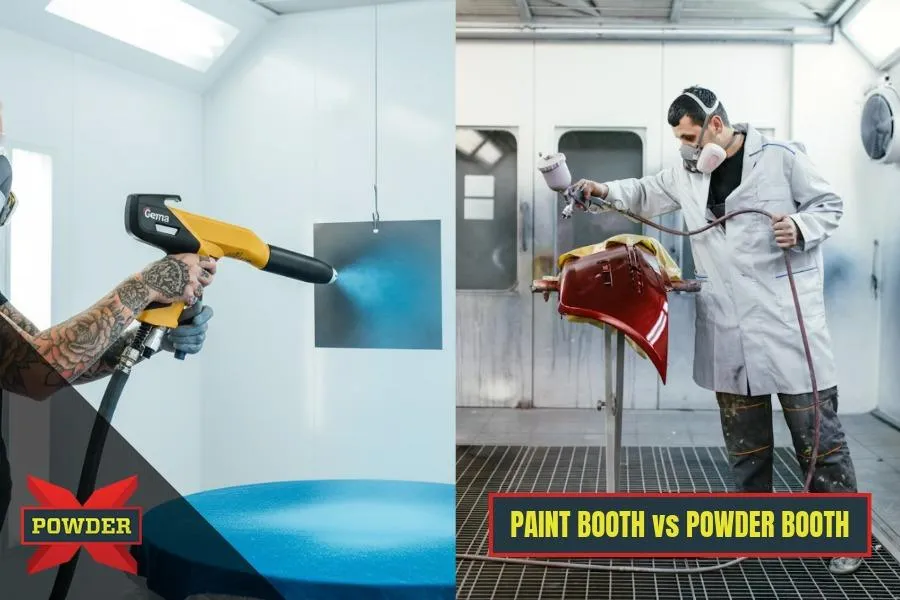
When comparing liquid paint booths to powder coating booths, the biggest distinctions come down to how each finish behaves in the air and how it must be collected, filtered, and exhausted. Although both types of booths share the same purpose, containing overspray and protecting operators, the technology behind them differs in important ways.
Powder coating booths are engineered to handle a dry, charged particulate, while liquid booths must manage wet, solvent-based materials. That difference shapes everything from airflow design to filtration requirements. Understanding these distinctions can help you choose the right system, improve transfer efficiency, and maintain compliance with environmental standards.
Powder Coating Booths: Designed for Dry Particulate & High-Efficiency Recovery
Powder coating booths rely on a contained airflow pattern that pulls airborne powder into a dedicated filtration system. Because powder is a dry, reusable particulate, the booth's internal components are designed to capture overspray, maintain clean air, and often allow for recycling of material.
Filtration in Powder Booths
Powder booths use multi-stage filtration systems specifically for dry particulate. The filters typically include:
Primary pre-filters and blanket rolls that capture the majority of overspray
Secondary or HEPA after-filters for extremely fine powder capture
3-Stage filter configurations in many modern booths to improve longevity
These filters not only clean the air but are essential to keeping the booth safe, consistent, and compliant with NFPA and OSHA guidelines.
Because powder overspray can sometimes be reclaimed, the level of dust management and filter accessibility tends to be much more sophisticated than in liquid booths.

Exhaust Systems in Powder Booths
Powder coating booths often exhaust significantly less air to the outside environment because well-designed filtration captures nearly all the particulate. Many systems can operate with:
Exhaust back into the plant through HEPA filters (where allowed)
Low-CFM exhaust fans since most of the particulate is captured internally
This is one major advantage: powder booths typically reduce conditioned air loss and create a more energy-efficient operation.
Spray-to-Waste Filtration
While reclaim booths exist, most job shops and production lines use spray-to-waste powder booths, which rely on:
Easy-change filter banks
Disposable cartridge filters
Quick-change color capability
These systems prioritize speed and cleanliness over material reclamation. Since powder is dry and does not require water curtains or sludge pits, spray-to-waste filtration is simpler, cleaner, and less costly to maintain compared to liquid systems.
Powder coating booths offer several operational advantages thanks to their dry filtration design:
Lower operating costs due to reduced exhaust requirements
Cleaner, simpler waste handling
Options for material reclamation
Safer, non-flammable overspray management
No VOCs, no solvent fumes
Liquid paint booths, while necessary for certain substrate types and finishes, require far more environmental control and more complex exhaust systems due to VOC emissions and wet overspray.
Powder coating booths are engineered around efficiency, cleanliness, and safety for dry particulate, while liquid paint booths are built to manage wet, solvent-based overspray and its associated fumes. The biggest differences: filters, exhaust systems, and spray-to-waste filtration reflect the nature of the coating itself.
#PowderX #PowderMarket #JoeyGolliver #PowderCoachsPlaybook


