Epoxy vs. Polyester Powder Coating: Key Differences | Powder-X
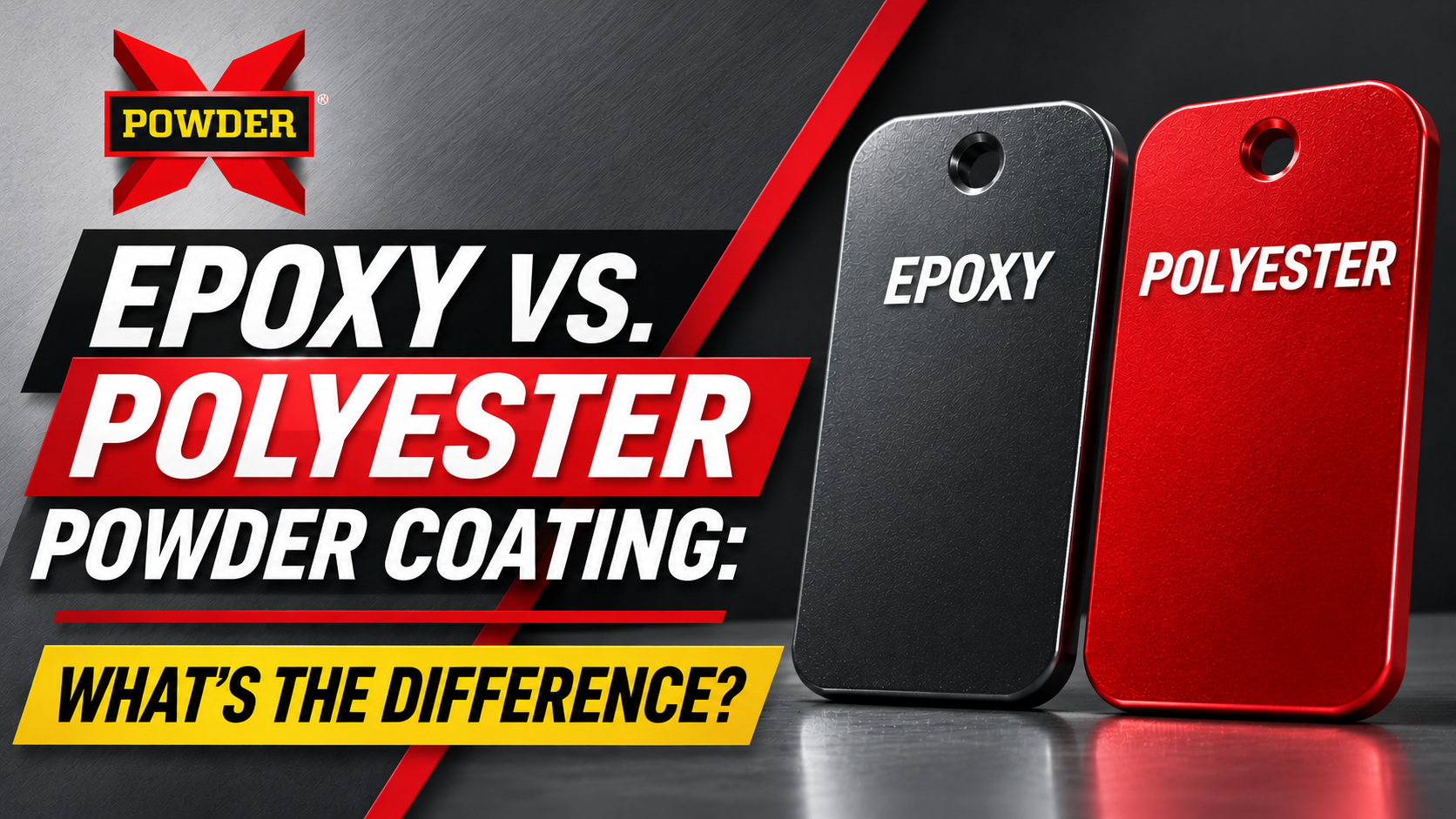
Epoxy vs. Polyester Powder Coating: What's the Difference?
Choosing the right powder coating involves more than picking a color or gloss level.
Two parts can look nearly identical when they come out of the curing oven but perform completely differently once they're put into service.
That's where powder chemistry comes into play.
Epoxy and polyester are two of the most commonly used powder coating chemistries, but they're designed for different performance requirements.
Choosing the wrong chemistry can shorten the life of a finish, even when the powder is applied and cured correctly.
At Powder-X, the focus is on understanding the complete coating process and how each decision contributes to a better finished product.
What Is Epoxy Powder Coating?
Epoxy powder coatings are known for their excellent adhesion, chemical resistance and protective properties.
They're commonly used in industrial environments where metal components need protection against certain chemicals, oils and corrosive conditions.
Typical applications include electrical enclosures, industrial machinery, equipment components and interior metal products.
However, traditional epoxy powder coatings have one major limitation: poor resistance to prolonged ultraviolet (UV) exposure.
When exposed to sunlight, epoxy coatings can chalk, fade and lose their original gloss.
Epoxy is generally best suited for indoor applications where protective performance is more important than exterior weather resistance.
Epoxy powders can also serve as primers beneath compatible, weather-resistant topcoats.
What Is Polyester Powder Coating?
Polyester powder coatings are widely used because of their versatility, appearance and exterior durability.
They generally offer better UV and weather resistance than traditional epoxy coatings, making them a popular choice for products exposed to outdoor conditions.
Common applications include outdoor furniture, fencing, automotive components, architectural products and agricultural equipment.
Polyester powders are available in a wide range of colors, textures and gloss levels.
Standard-durable and super-durable polyester formulations also offer different levels of weathering performance.
Polyester is generally the better starting point for applications where sunlight exposure, color retention and outdoor appearance matter.
Epoxy vs. Polyester Powder Coating: A Side-by-Side Comparison
Performance Characteristic | Epoxy | Polyester |
|---|---|---|
UV resistance | Poor | Good to excellent |
Outdoor durability | Generally limited | Good to excellent |
Chemical resistance | Often excellent | Formulation-dependent |
Adhesion | Generally excellent | Generally very good |
Corrosion protection | Often excellent | System-dependent |
Indoor applications | Excellent | Excellent |
Color and gloss retention outdoors | Limited | Generally very good |
Common applications | Industrial and protective finishes | Decorative and exterior finishes |
These are general characteristics. Actual performance depends on the specific powder formulation, surface preparation, film thickness and curing conditions.
What About Epoxy-Polyester Hybrid Powder Coatings?
Epoxy-polyester hybrid powders combine characteristics of both resin systems.
They offer a practical balance of appearance, adhesion, mechanical performance and cost for many indoor applications.
Hybrids are commonly used on office furniture, shelving, cabinets and appliances.
However, combining epoxy and polyester doesn't automatically make the coating suitable for outdoor use.
Most conventional hybrids are intended for interior applications because their epoxy content limits long-term UV resistance.
Can Epoxy and Polyester Be Used Together?
Yes, when the products are designed and approved for use together.
An epoxy primer followed by a compatible polyester topcoat can provide a combination of corrosion protection and exterior weather resistance.
This type of coating system may be appropriate for equipment, fabricated steel components and products exposed to demanding outdoor environments.
However, compatibility, intercoat adhesion, total film thickness and curing requirements must all be considered.
Adding another layer only improves the finish when both coatings work together as a complete system.
Does Powder Chemistry Affect the Application Process?
Both epoxy and polyester powders can generally be applied using conventional electrostatic powder coating equipment.
However, individual formulations may have different application characteristics, recommended film thicknesses and curing schedules.
Operators should always review the powder manufacturer's Technical Data Sheet (TDS) before beginning production.
Remember, curing requirements are typically based on actual part-metal temperature—not simply the temperature displayed on the oven controller.
Even the right powder chemistry can deliver poor results when the application or curing process is incorrect.
Which Powder Coating Should You Choose?
Start by understanding where the finished part will be used and what it needs to withstand.
An indoor industrial component exposed to chemicals may benefit from an epoxy coating. An outdoor railing exposed to sunlight and rain may be better suited to polyester.
For demanding environments, a properly specified multi-coat system may be the better solution.
The decision should be based on performance requirements rather than color, price or availability alone.
The Powder-X Takeaway
Epoxy and polyester powder coatings both offer valuable performance characteristics, but neither is the best choice for every application.
Epoxy excels in many indoor protective applications, while polyester is generally better suited for outdoor durability and UV resistance.
Regardless of the chemistry selected, proper surface preparation, reliable application equipment and accurate curing remain essential.
A professional powder coating finish isn't just about how good the part looks when it leaves the oven. It's about how well it performs months and years later.
Choosing the right chemistry is where that performance begins.
Ready To Build A Powder Coating System The Right Way?
Whether you are starting your first powder coating business, bringing finishing in-house, or upgrading an existing operation, Powder-X can help you choose a batch system built around your goals.
From ovens and booths to complete systems, training, technical support, and long-term guidance, our team is here to help you make a smart investment in equipment that is designed to perform.
Contact Powder-X today to speak with one of our coating specialists and start building a powder coating operation with confidence.


