How to Spray Metallic Powder Coating Correctly | Powder-X
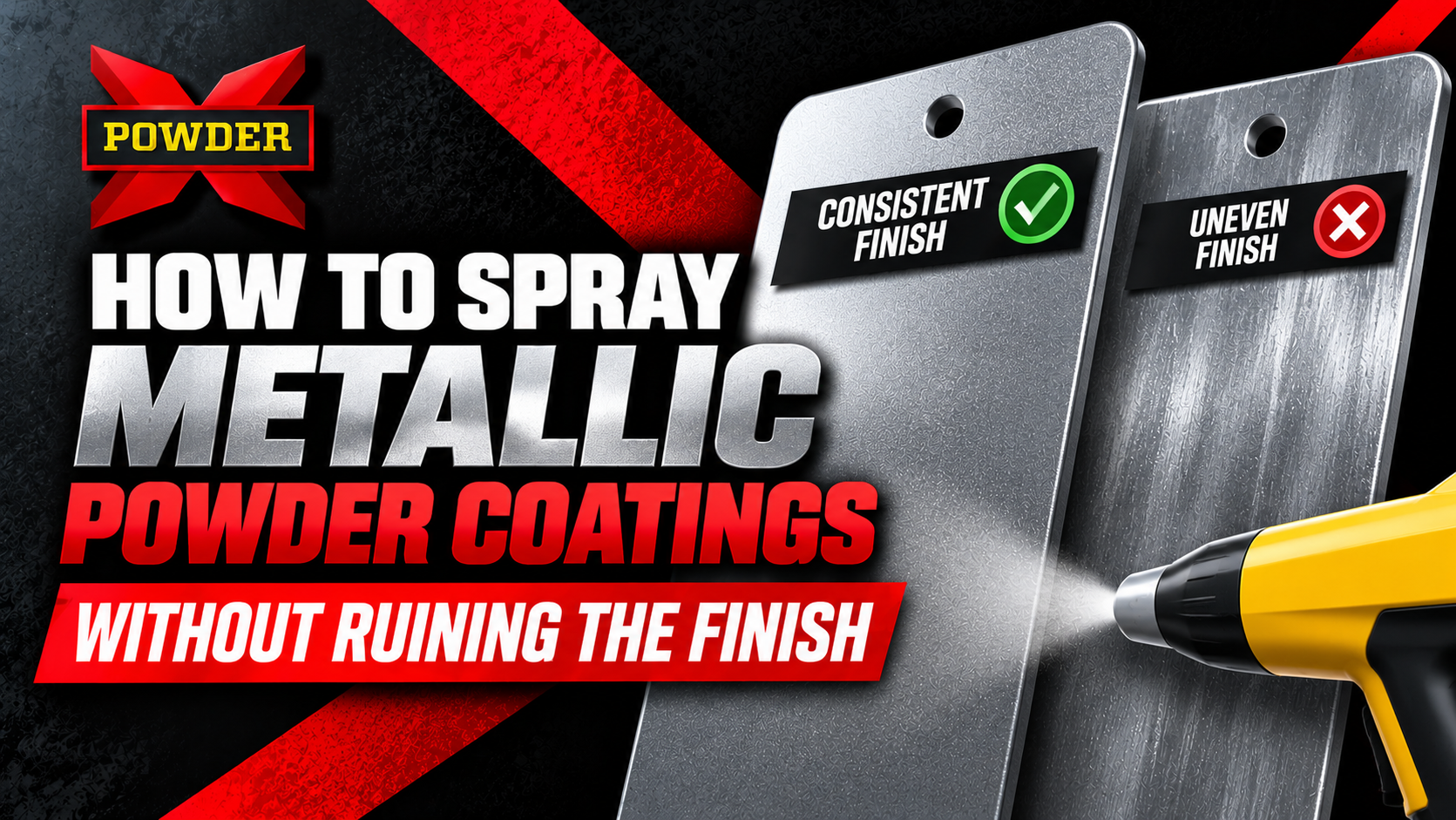
How to Spray Metallic Powder Coatings Without Ruining the Finish
Metallic powder coatings can create some of the most impressive finishes in the industry.
From shimmering silvers to deep metallic blacks, these coatings add dimension and visual appeal that standard solid colors can't always match.
But there's a catch.
Metallic powders can be less forgiving than standard powder coatings.
A small change in gun settings, application technique or powder delivery can affect how metallic particles distribute across the surface.
The result? Uneven color, streaking, patchy metallic effects or parts that don't match.
At Powder-X, the focus is on understanding the process behind a quality finish—not simply spraying more powder until the part looks covered.
Why Are Metallic Powder Coatings Different?
Metallic powder coatings contain effect pigments or particles that create their distinctive appearance.
Depending on the formulation, those particles may behave differently during electrostatic application.
That means two parts sprayed with the same powder can look different if the application conditions change.
Some metallic powders are bonded, meaning the metallic effect particles are attached to the powder particles during manufacturing.
Others are dry-blended, where the metallic particles are mixed with the powder but aren't bonded to it.
This difference can affect application consistency, powder recovery and the appearance of the finished coating.
The first step to spraying metallic powder successfully is understanding the specific powder being used.
1. Keep Your Gun Settings Consistent
One of the biggest mistakes when spraying metallic powder is constantly changing gun settings.
Electrostatic voltage, current limiting, powder output and airflow can all influence deposition and the final appearance.
With certain metallic formulations, changing these settings can change how the metallic effect develops.
That can make one part look brighter or darker than another.
How to get it right: Start with the powder manufacturer's recommended settings and establish a repeatable spray setup.
Once a satisfactory finish is achieved, document those settings and use them consistently throughout the job.
2. Maintain a Consistent Spray Distance
Spray distance matters with every powder coating, but metallic finishes can make inconsistencies especially noticeable.
Moving the gun too close or too far from the part can change how powder deposits on the surface.
Uneven passes can also create visible differences in the metallic effect.
How to get it right: Maintain a consistent gun-to-part distance, spray angle and overlap.
Use smooth, controlled passes rather than repeatedly touching up individual areas.
The goal is to apply the powder as evenly as possible across the entire part.
3. Watch Your Powder Flow
Inconsistent powder delivery can create problems before the powder even reaches the metal.
Poor fluidization, moisture contamination, incorrect air settings or unstable powder feed can cause surging and uneven application.
With metallic powders, those changes may become visible in the finished appearance.
How to get it right: Use clean, dry compressed air and make sure the powder feed system is operating properly.
Follow the powder manufacturer's recommendations for fluidization and delivery.
If the powder flow starts pulsing or changing, correct the problem before continuing production.
4. Be Careful With Reclaimed Powder
Reclaiming overspray can help reduce material waste, but metallic powders require special attention.
Depending on the formulation, the metallic effect particles may separate from the base powder during spraying and recovery.
That can change the appearance of the reclaimed material.
Bonded metallic powders are often better suited to controlled reclaim processes than dry-blended formulations, but compatibility and allowable reclaim ratios still depend on the manufacturer's instructions.
How to get it right: Verify whether the powder is approved for reclaim and follow the recommended virgin-to-reclaim mixing ratio.
For appearance-critical jobs, testing with virgin powder can help eliminate reclaim variation as a possible cause.
5. Control Film Thickness
Applying more powder doesn't automatically make a metallic finish look better.
In fact, excessive or inconsistent film thickness can change the appearance of certain metallic coatings.
Thin areas may also look different from properly coated sections.
How to get it right: Follow the powder manufacturer's recommended film thickness range and measure representative parts.
Consistency matters just as much as coverage.
6. Avoid Excessive Touch-Ups
Metallic finishes can make repeated touch-ups more noticeable.
When additional powder is applied to one area, the metallic effect may not match the surrounding surface.
This can create visible patches, especially on large flat panels.
How to get it right: Develop a consistent spray pattern that provides complete coverage on the first application.
Pay attention to edges, recesses and part geometry before spraying.
For difficult shapes, use a tested application sequence rather than repeatedly adjusting the gun during production.
7. Don't Forget Grounding and Curing
Poor grounding can cause inconsistent powder attraction and uneven coverage.
Make sure hooks, racks and contact points provide reliable electrical grounding.
Curing matters, too.
Some metallic coatings can experience appearance changes if the cure schedule isn't followed correctly.
Always verify the powder manufacturer's requirements using actual part-metal temperature, not just the oven's displayed temperature.
A great metallic finish requires consistent application and consistent curing.
Test Before Spraying the Entire Job
Metallic finishes are especially sensitive to process changes.
Before coating a large production run, spray a representative sample using the intended equipment, settings, film thickness and cure schedule.
Evaluate the finished part under consistent lighting.
Once the appearance meets the customer's expectations, document the process.
For repeat orders, keep an approved sample as a visual reference.
That makes it easier to maintain consistency between batches and operators.
The Powder-X Takeaway
Metallic powder coatings can produce outstanding finishes, but they require a controlled application process.
Gun settings, spray distance, powder flow, reclaim practices, film thickness and curing all influence the final result.
The biggest mistake is treating metallic powder like every other coating.
The secret to a consistent metallic finish isn't constantly adjusting the equipment. It's finding the right process and repeating it.
With proper equipment, clean compressed air, reliable grounding and consistent application techniques, powder coating shops can produce metallic finishes that look as professional as the customers expect.
Ready To Build A Powder Coating System The Right Way?
Whether you are starting your first powder coating business, bringing finishing in-house, or upgrading an existing operation, Powder-X can help you choose a batch system built around your goals.
From ovens and booths to complete systems, training, technical support, and long-term guidance, our team is here to help you make a smart investment in equipment that is designed to perform.
Contact Powder-X today to speak with one of our coating specialists and start building a powder coating operation with confidence.


