
Metallic Powder Coating Color Variation: Causes & Fixes | Powder-X
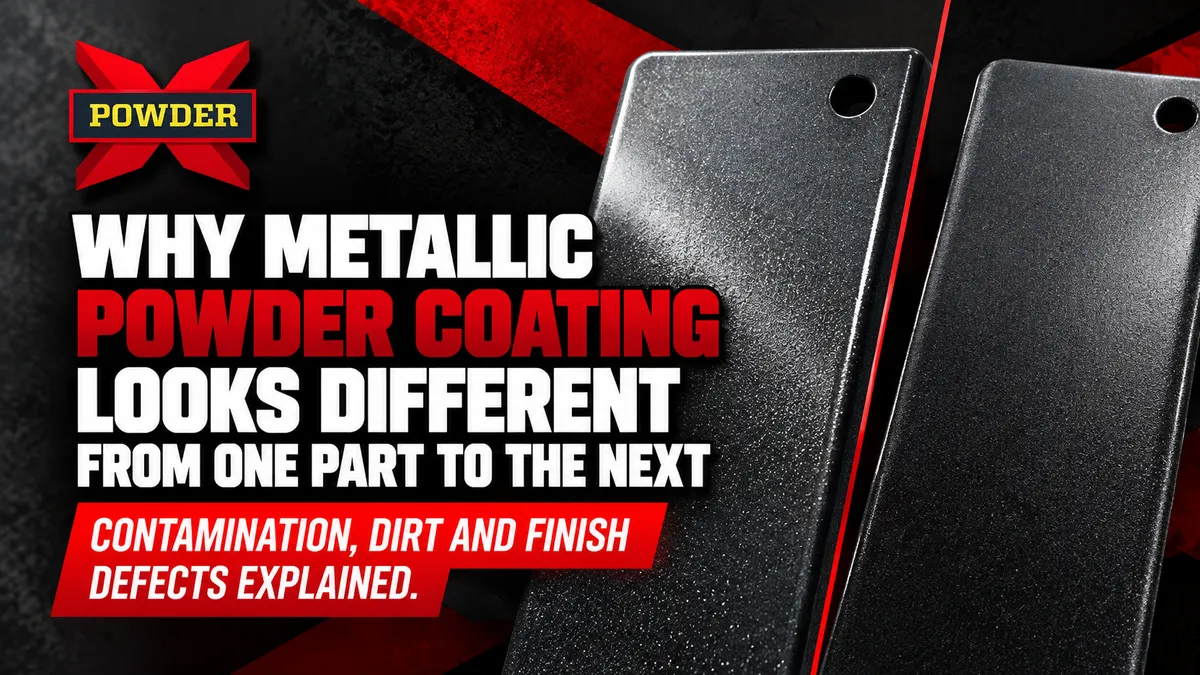
Why Metallic Powder Coating Looks Different From One Part to the Next
Two metal parts. Same powder. Same color. Same equipment.
But when they come out of the oven, they don't quite match.
One looks brighter. Another appears darker. One has a smooth metallic sparkle, while the other looks slightly cloudy or uneven.
So what happened?
Metallic powder coatings can be more sensitive to application conditions than standard solid colors. Small differences in gun settings, grounding, film thickness and spraying technique can change how the metallic effect appears on the finished part.
At Powder-X, the solution starts with understanding what makes metallic finishes different.
The goal isn't simply to spray the same color. It's to create the same finish every time.
Why Are Metallic Powder Coatings Different?
Standard solid-color powders primarily rely on pigments to create their appearance.
Metallic powders contain effect pigments, such as aluminum or mica-based particles, that reflect light differently depending on their distribution and orientation in the coating.
Think about the way a metallic automotive finish changes appearance as light moves across the surface.
Powder coating works on a similar principle.
If the metallic particles are distributed or oriented differently from one part to another, the finished color can appear lighter, darker or more sparkly.
That's why two parts coated with the same powder can look different.
1. Inconsistent Gun Settings
One of the first things to check is the powder coating gun.
Changes in electrostatic voltage, current limiting, powder flow and gun-to-part distance can influence how powder deposits on the surface.
With certain metallic powders, those differences can also affect the appearance of the metallic effect.
For example, one operator may spray a part with higher electrostatic settings while another uses a softer application approach.
Both parts may have acceptable coverage, but the metallic appearance may not match.
How to fix it: Establish a consistent application recipe for each metallic powder. Record the gun settings, powder flow, nozzle configuration and spraying distance. Follow the powder and equipment manufacturers' recommendations rather than assuming one setting works for every metallic finish.
2. Poor Grounding
Grounding is important for every electrostatic powder coating application, but inconsistent grounding can be especially noticeable with metallic finishes.
Dirty hooks, coating buildup on racks and poor electrical connections can change how efficiently powder deposits on a part.
That may contribute to uneven coverage or differences in appearance.
How to fix it: Keep hooks and grounding contact points clean. Check grounding connections regularly and use consistent racking arrangements for repeat parts.
A reliable ground helps create a more predictable application process.
3. Uneven Film Thickness
Film thickness can influence how metallic powder coating looks.
If one part receives a heavier coating than another, the difference may affect color depth, metallic appearance or surface texture.
Too much powder can also contribute to orange peel or other flow problems.
The solution isn't necessarily to apply more powder.
How to fix it: Follow the powder manufacturer's recommended film-thickness range and verify the coating with a suitable thickness gauge.
For repeat production, establish a target thickness and check representative parts throughout the run.
4. Different Spraying Techniques
Two experienced operators can coat the same part differently.
One may hold the gun closer. Another may move faster. One may make additional passes over difficult areas.
With solid colors, those differences might not always be obvious.
With metallic finishes, they can sometimes create noticeable variations.
Part orientation matters, too. A horizontal panel and a vertical panel may not present the same application conditions.
How to fix it: Standardize the spraying technique for repeat parts. Keep gun distance, overlap, part orientation and application sequence as consistent as practical.
For difficult jobs, coat a sample and establish a proven process before running the full order.
5. Powder Reclaim Can Change Metallic Appearance
This is one of the most important differences between metallic and conventional solid-color powders.
Some metallic powders contain effect particles that behave differently from the base powder during spraying and recovery.
As overspray is collected and reused, the composition of the reclaimed material may differ from the original powder.
That can affect the appearance of subsequent parts.
The behavior depends on the powder formulation. Bonded metallic powders are generally designed to keep effect pigments more closely associated with the base powder, while dry-blended metallics can be more susceptible to separation.
How to fix it: Follow the powder manufacturer's specific reclaim recommendations. Some metallic products have restricted reclaim limits or require fresh-to-reclaim ratios to be carefully controlled.
Never assume that a reclaim procedure suitable for a solid color will work equally well for a metallic finish.
6. Different Powder Lots
Even when the product name and color code are identical, different manufacturing lots may have slight appearance variations within the supplier's tolerances.
This can become noticeable when parts from separate production runs are installed next to each other.
How to fix it: When appearance matching is critical, use the same powder lot for a complete job whenever practical. Keep lot numbers in the production records and check new lots against approved samples before coating parts that must match an earlier run.
7. Part Geometry and Curing Conditions
A flat panel and a complicated fabricated assembly don't coat exactly the same way.
Corners, recessed areas and changes in part orientation can influence electrostatic deposition and film thickness.
Those differences may become more visible with metallic finishes.
Curing also matters. If the coating isn't processed within the manufacturer's specified cure conditions, appearance and performance can be affected.
How to fix it: Use consistent racking and application procedures, verify film thickness and follow the powder manufacturer's cure schedule based on actual part-metal temperature.
For demanding metallic jobs, an approved sample coated under representative production conditions can help establish expectations.
How to Keep Metallic Powder Coating Consistent
The most effective approach is to make metallic coating a repeatable process instead of relying on operator judgment alone.
For recurring jobs, establish a documented recipe that includes the powder product and lot, application settings, grounding and racking setup, target film thickness, reclaim procedure and verified cure conditions.
Then inspect finished parts under consistent lighting.
Metallic coatings can appear different depending on viewing angle and illumination, so comparing one part under bright shop lighting and another in natural daylight may lead to the wrong conclusion.
A consistent inspection method is just as important as a consistent application method.
What If the Parts Already Look Different?
Before changing everything, determine whether the variation affects the entire part or only certain areas.
If the whole part appears darker or lighter, investigate powder lot, application settings, film thickness and reclaim conditions.
If the variation appears around edges, corners or recessed areas, check grounding, part geometry and spraying technique.
If the difference follows a production shift or operator change, review the application recipe and setup records.
Change one variable at a time and compare the results against an approved sample.
That makes it easier to identify the cause without creating additional inconsistencies.
The Powder-X Takeaway
Metallic powder coating can produce impressive finishes, but those finishes require careful process control.
Small changes in application settings, grounding, film thickness, spraying technique, reclaim and powder lots can create noticeable appearance differences.
The answer isn't to keep adjusting the gun until the parts look close enough.
It's to establish a process that can be repeated.
Document the settings. Maintain the grounding. Control film thickness. Follow the powder manufacturer's reclaim and cure recommendations. Compare parts under consistent lighting.
When the process stays consistent, the metallic finish has a much better chance of staying consistent, too.
Ready To Build A Powder Coating System The Right Way?
Whether you are starting your first powder coating business, bringing finishing in-house, or upgrading an existing operation, Powder-X can help you choose a batch system built around your goals.
From ovens and booths to complete systems, training, technical support, and long-term guidance, our team is here to help you make a smart investment in equipment that is designed to perform.
Contact Powder-X today to speak with one of our coating specialists and start building a powder coating operation with confidence


