Multiple Coats of Powder Coating: Primer, Base & Clear | Powder-X
Powder Coating Multiple Coats: When You Need a Primer, Base Coat or Clear
Does every powder coating job need more than one coat?
Not at all.
Many powder coatings are designed to deliver the desired color, appearance and protection in a single application. But certain jobs benefit from additional layers, especially when corrosion resistance, special finishes or added surface protection are important.
The challenge is knowing when those extra coats are necessary.
At Powder-X, the focus is on building the right coating process for the application—not simply applying more powder.
Because more layers don't automatically mean a better finish.
Can You Apply Multiple Layers of Powder Coating?
Yes. Powder coating can be applied in multiple layers when the products are compatible and the application process is properly controlled.
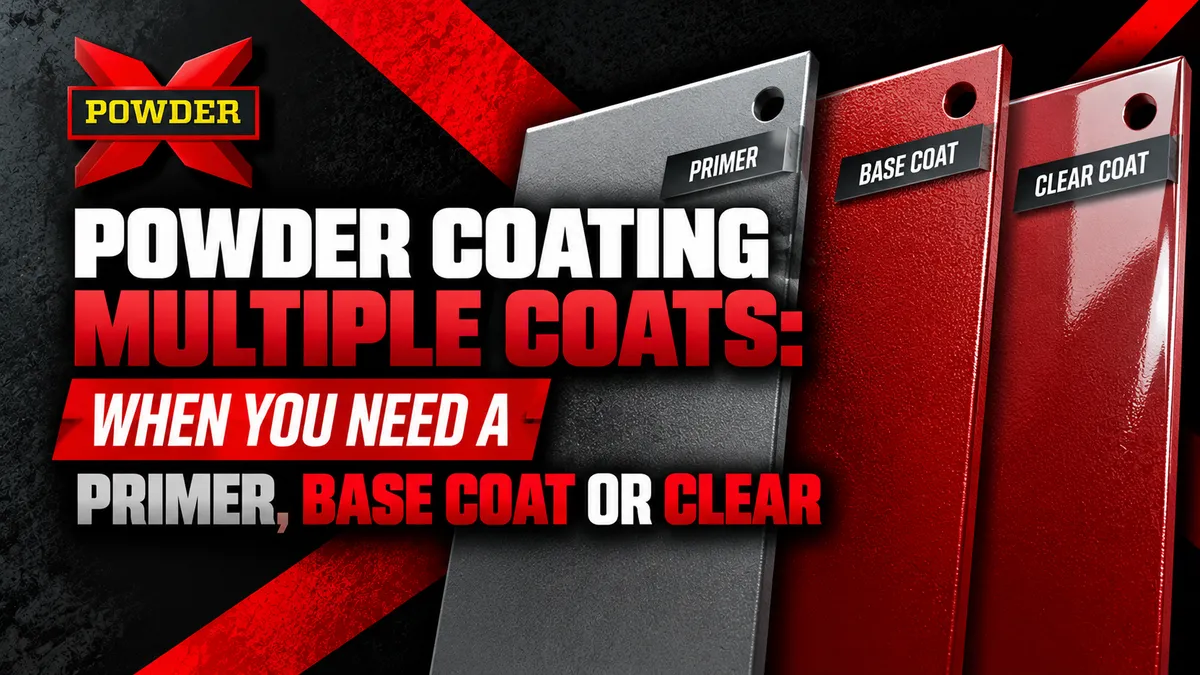
A typical multi-coat system might include a primer followed by a color coat. Other systems use a color base coat followed by a clear coat.
Some applications require all three.
Each layer has a different purpose, and not every job needs every layer.
The important thing is to follow the powder manufacturer's instructions for coating compatibility, film thickness and curing between coats.
When Do You Need a Powder Coating Primer?
A powder coating primer is generally used when the job requires additional corrosion protection, adhesion performance or other specialized properties.
For example, metal components exposed to moisture, road salt or demanding outdoor conditions may benefit from a properly specified primer-and-topcoat system.
Certain primers are formulated to improve corrosion resistance, while others serve more specialized purposes.
But primer isn't a substitute for proper surface preparation.
If the metal still has oil, rust or contamination on it, adding another coating layer won't automatically solve the problem.
How to get it right: Start with proper cleaning and pretreatment, then select a primer that's compatible with the substrate, topcoat and intended environment.
What Is a Powder Coating Base Coat?
A base coat is the layer that establishes the primary color or visual effect.
In many applications, a single powder coating serves as both the color coat and the finished exterior surface.
But certain decorative systems use a base coat underneath another layer to create a specific appearance.
Metallic, translucent and special-effect finishes are examples where a base-and-clear system may be recommended.
The base coat provides the foundation for the final appearance, while the clear coat changes or protects the visible finish.
How to get it right: Use a manufacturer-approved coating combination and follow the specified application and cure procedure.
When Should You Use a Powder Coating Clear Coat?
A clear coat is commonly used to achieve a particular appearance or provide additional protection over a compatible base coat.
Depending on the formulation, it may enhance gloss, create visual depth or help protect a decorative effect.
For example, certain metallic or special-effect powders are designed to be finished with a clear coat.
However, not every clear powder is suitable for every application.
A clear coat intended for indoor decorative use may not provide the weathering performance required for outdoor exposure.
How to get it right: Choose a clear powder designed for the intended environment and approved for use over the selected base coat.
And remember, a clear coat can change the appearance of the color underneath it. Test the complete system before coating an entire order.
Do You Have to Fully Cure Each Coat?
Not necessarily.
Some multi-coat powder systems use a partial cure, sometimes called a gel or flash stage, before the next coat is applied.
Others require the first coat to be fully cured.
The correct method depends on the specific powder formulations and the manufacturer's instructions.
This matters because an improperly cured first layer can create problems with intercoat adhesion, appearance or the performance of the finished system.
A fully cured first coat may also require a particular recoating procedure to help the next layer deposit and bond correctly.
The safest approach is to follow the approved cure schedule for the entire coating system—not guess based on how the first coat looks.
Why Is the Second Coat Sometimes Harder to Apply?
Applying powder over bare, properly grounded metal is different from applying powder over an existing coating.
Once the first layer is present, it acts as an electrical insulator.
That can make it harder for additional charged powder to deposit evenly, especially in recessed areas or on parts with complicated geometry.
Operators may notice uneven coverage or difficulty building the second layer.
Increasing voltage isn't always the answer. Excessive electrostatic settings can make some application problems worse.
How to get it right: Verify grounding, film thickness, gun settings and the manufacturer's recommended recoating procedure.
The application equipment and process should be adjusted for the specific multi-coat system.
Can Too Many Coats Cause Problems?
Yes.
Every additional coat increases total film thickness.
If the finished coating becomes thicker than the manufacturer's recommended range, it may develop appearance problems or fail to meet certain performance requirements.
Multiple coats also introduce additional handling, oven time and opportunities for contamination.
And if the coating layers aren't compatible, the finished system may experience adhesion or other performance problems.
That's why adding another coat shouldn't be treated as an automatic upgrade.
A properly designed two-coat system can outperform an unsuitable three-coat system. The number of layers isn't what determines quality.
How to Know Which Powder Coating System You Need
The right coating system depends on what the finished part is expected to do.
A decorative indoor component may only need a properly applied single coat.
A part exposed to aggressive outdoor conditions may require a specified primer-and-topcoat system.
A specialty metallic finish may need a base coat and compatible clear to achieve its intended appearance.
Before selecting the process, consider the substrate, service environment, appearance requirements, and customer specifications.
Then verify the complete coating system with the powder manufacturer.
For demanding applications, representative test panels and appropriate performance testing can help confirm the results before production begins.
The Powder-X Takeaway
Multiple coats can improve a powder coating system when each layer serves a specific purpose.
Primers can provide additional protection. Base coats establish color and special effects. Clear coats can enhance appearance or protect certain finishes.
But extra layers also mean more application time, more curing considerations, and more opportunities for problems.
The key is understanding what the part actually needs.
Don't add another coat just because you can. Build the coating system around the performance the customer expects.
And make sure the equipment, preparation, and curing process can deliver that result consistently.
Ready To Build A Powder Coating System The Right Way?
Whether you are starting your first powder coating business, bringing finishing in-house, or upgrading an existing operation, Powder-X can help you choose a batch system built around your goals.
From ovens and booths to complete systems, training, technical support, and long-term guidance, our team is here to help you make a smart investment in equipment that is designed to perform.
Contact Powder-X today to speak with one of our coating specialists and start building a powder coating operation with confidence


