
Powder Coating Craters & Fisheyes: Causes and Fixes | Powder-X
Why Is My Powder Coating Full of Craters and Fisheyes?
A freshly powder-coated part comes out of the oven, and something isn't right.
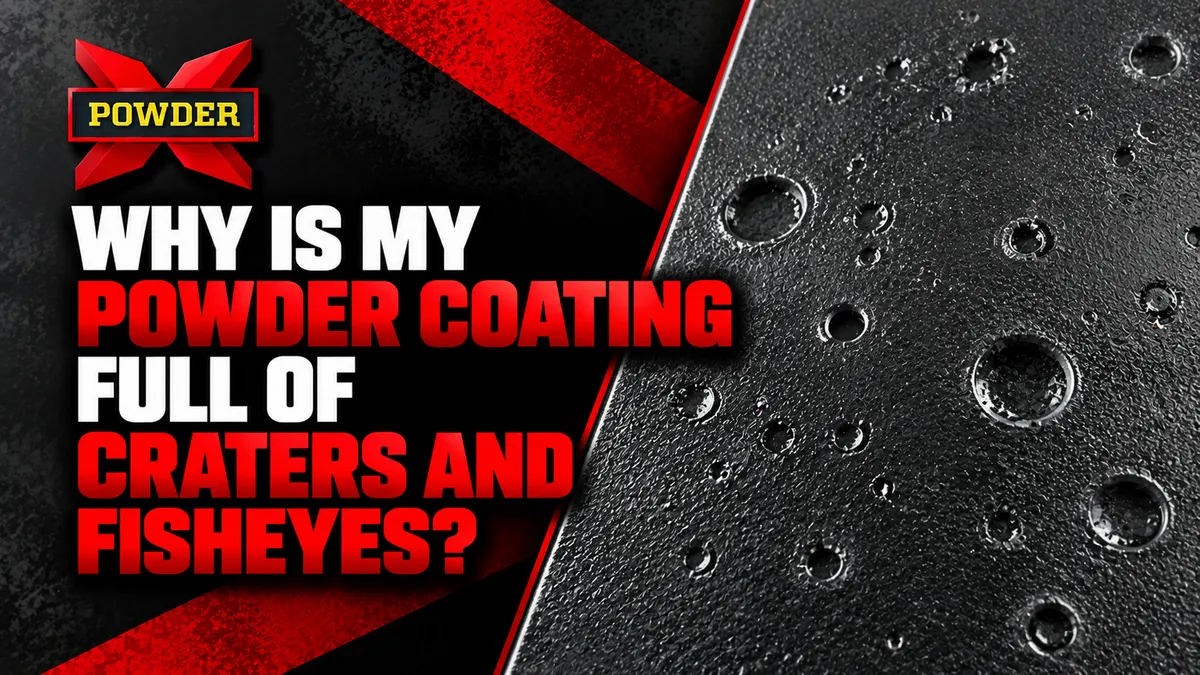
Instead of a smooth, even finish, the surface is covered with small circular marks. Some look like tiny holes. Others resemble little rings where the coating has pulled away from the metal.
These defects are commonly called craters and fisheyes, and they're among the more frustrating problems in powder coating.
The good news is that they usually leave clues about what's happening.
At Powder-X, the best approach is to identify the source of the problem before adjusting the gun or spraying another coat.
Because a surface defect can't be fixed permanently until the cause is understood.
What Are Craters and Fisheyes in Powder Coating?
Craters are small, circular depressions in the finished coating. They may have raised edges or appear as shallow pits.
Fisheyes are a type of crater-like defect where the coating pulls away from a contaminated area, sometimes exposing the substrate.
Think about what happens when a drop of oil lands in water. The surrounding liquid moves away rather than spreading evenly across it.
Something similar can happen when powder coating melts and flows over a contaminated surface.
The coating pulls away from an area where surface tension has been disrupted, leaving a visible defect after curing.
Although craters and fisheyes often look similar, not every crater is caused by the same type of contamination.
1. Oil and Grease on the Metal
One of the first things to investigate is surface contamination.
Machining oils, lubricants, fingerprints and leftover manufacturing residues can interfere with how powder flows across the metal.
Even if a part looks clean, small amounts of contamination may remain.
When the powder melts in the oven, it may pull away from those areas and leave circular defects.
How to fix it: Review the cleaning and pretreatment process. Make sure oils and residues are properly removed before coating, and avoid touching prepared surfaces with contaminated gloves or hands.
2. Silicone Contamination
Silicone is a particularly troublesome contaminant in finishing operations.
It can come from certain lubricants, sprays, polishes and maintenance products used around the shop.
Small amounts can interfere with coating flow and create fisheyes.
The source may not even be near the powder coating booth. Contamination can be transferred through handling, equipment or nearby activities.
How to fix it: Identify products used throughout the work area and keep incompatible silicone-containing materials away from preparation and coating operations.
If fisheyes suddenly appear across different parts and powder colors, investigate whether a new spray, lubricant or cleaning product has been introduced.
3. Moisture or Oil in Compressed Air
Compressed air is another possible source of contamination.
If the air supply contains oil or moisture, contaminants may enter the powder delivery system and affect application quality.
A problem with an air dryer, filter or compressor can sometimes create defects across multiple jobs.
How to fix it: Inspect the compressed-air treatment system, including dryers, filters, drains and oil-removal components. Verify that the air meets the powder coating equipment manufacturer's requirements.
Clean, dry compressed air is essential for consistent powder application.
4. Contaminated Powder or Application Equipment
Sometimes the problem isn't on the metal.
Foreign material in the powder supply, contaminated feed equipment or residue from previous coating jobs can affect the finished surface.
This is especially worth checking after a color change or equipment cleaning.
Powder that has been stored improperly or exposed to contamination may also behave differently during application.
How to fix it: Inspect the powder supply and verify proper storage conditions. Clean the gun, hoses and feed system according to the equipment manufacturer's procedures.
If the defect appears with only one powder product, isolate that material and compare it with a known-good sample.
5. Incomplete Cleaning or Pretreatment
A part may have been blasted, washed or chemically treated and still carry residues that interfere with coating.
Improper rinsing, contaminated cleaning solutions or incomplete drying can leave material behind.
That contamination may not become obvious until the powder flows during curing.
How to fix it: Verify that the cleaning and pretreatment process is operating correctly. Check chemical concentration, temperature, contact time and rinsing where applicable.
Make sure parts are completely dry before entering the powder coating booth.
A good finish starts long before the powder gun is triggered.
6. Outgassing From the Substrate
Not every crater is a fisheye.
Some defects that resemble craters are actually caused by gas escaping from the metal during heating.
Castings, porous metals and previously contaminated components may release trapped gases or vapors as they reach curing temperature.
That release can interrupt the coating while it's melting and curing, leaving pinholes, bubbles or crater-like marks.
This is called outgassing.
How to fix it: Determine whether the problem is associated with a particular substrate. Where appropriate, use a validated pre-bake procedure and suitable preparation methods. Certain powder formulations are also designed to be more forgiving of outgassing.
How to Tell Fisheyes From Other Powder Coating Defects
Different defects can look similar at first glance.
What the finish looks like | Possible cause |
|---|---|
Circular depressions or rings | Surface contamination or flow disturbance |
Coating pulled away from a central spot | Oil, silicone or other contamination |
Tiny holes or bubbles | Outgassing or trapped volatiles |
Raised hard specks | Dust, dirt or foreign particles |
Widespread rough texture | Orange peel or application-related flow problems |
These are clues, not definitive diagnoses. Close inspection and controlled testing may be needed to identify the cause.
How to Troubleshoot Craters and Fisheyes
When defects begin appearing, the worst approach is to change several things at once.
Start by looking for a pattern.
Are the defects appearing on every part or only certain materials? Do they occur with every powder or only one color? Did they begin after maintenance, a chemical change or a new cleaning product?
If the defects affect multiple powders and substrates, investigate shared sources such as compressed air, booth contamination and handling procedures.
If the problem appears only on one type of part, focus on its manufacturing history, cleaning and preparation.
If the marks resemble pinholes or bubbles, consider outgassing rather than assuming oil contamination.
A controlled test on a properly cleaned, known-good panel can help narrow down whether the issue comes from the substrate or the coating process.
Change one variable at a time and document the results.
That makes troubleshooting faster and prevents unnecessary adjustments.
Can You Fix Craters and Fisheyes After Curing?
Once craters or fisheyes are cured into the finish, they generally won't disappear on their own.
For parts that fail appearance or performance requirements, stripping and recoating may be necessary.
In some applications, an approved repair procedure may be available, but simply applying more powder over the defect isn't a reliable solution.
If the original contamination remains, the same problem may happen again.
Before recoating, identify and eliminate the source.
Otherwise, the shop may end up paying for the same mistake twice.
The Powder-X Takeaway
Craters and fisheyes are frustrating because they often don't become obvious until the part comes out of the oven.
But the cause frequently starts much earlier.
Oil, grease, silicone, contaminated compressed air, improper cleaning and outgassing can all interfere with the finished coating.
The solution isn't automatically a different powder gun setting or a heavier coat.
It's a controlled process that starts with clean metal, proper preparation, clean application equipment and reliable compressed air.
When craters and fisheyes appear, don't just look at the finish. Look at everything the part came into contact with before it reached the oven.
Ready To Build A Powder Coating System The Right Way?
Whether you are starting your first powder coating business, bringing finishing in-house, or upgrading an existing operation, Powder-X can help you choose a batch system built around your goals.
From ovens and booths to complete systems, training, technical support, and long-term guidance, our team is here to help you make a smart investment in equipment that is designed to perform.
Contact Powder-X today to speak with one of our coating specialists and start building a powder coating operation with confidence


