Troubleshooting | Learning Your Equipment and What Its Telling You
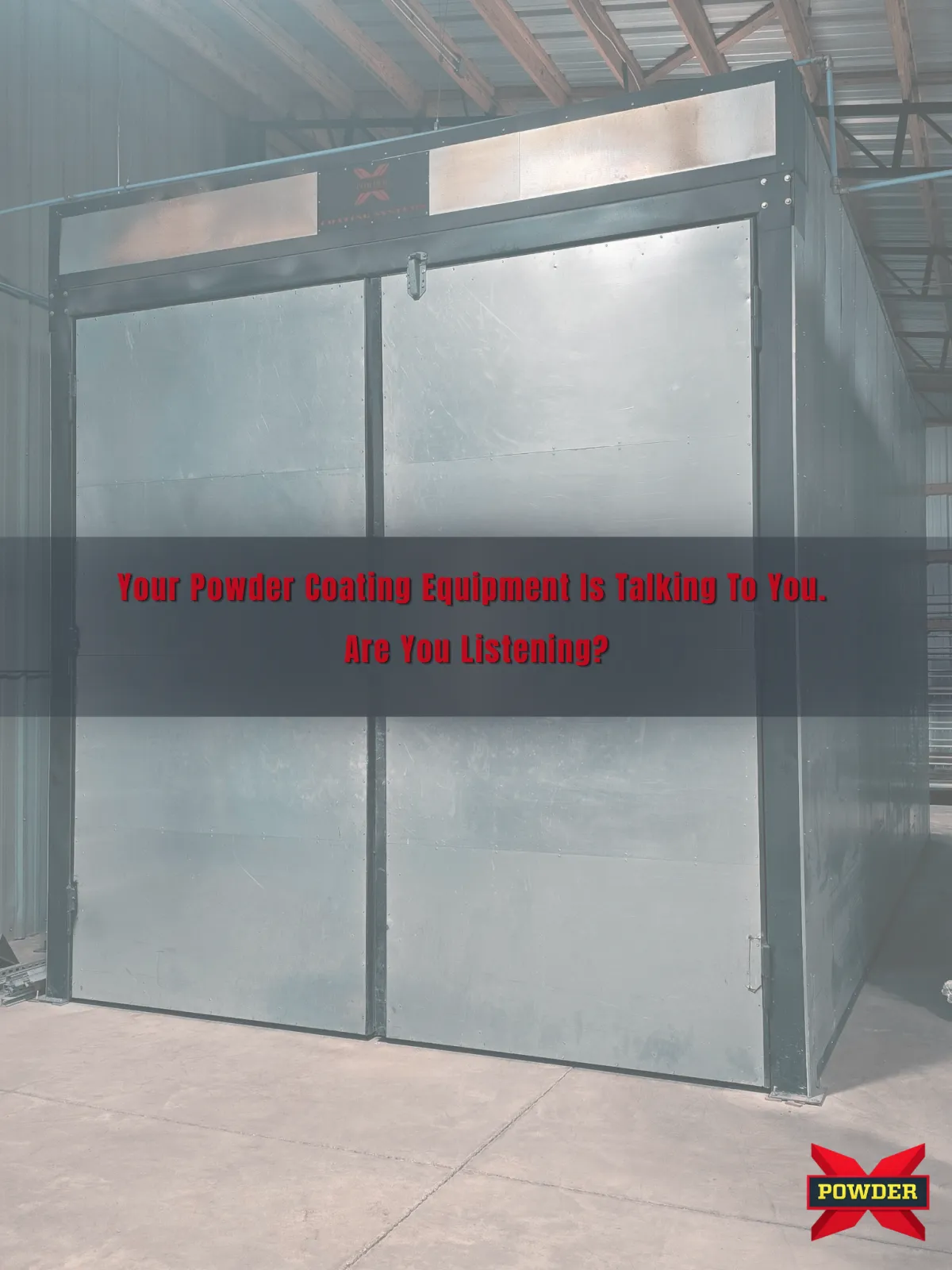
Your Powder Coating Equipment Is Talking to You. Are You Listening?
How to Spot Small Problems Before They Become Expensive Breakdowns
Most powder coating equipment does not fail overnight. It gives warnings first. The problem is that many shops ignore those warnings until they become expensive.
A little more powder on the floor than usual.
An oven that seems to take longer to reach temperature.
A spray pattern that does not look quite right.
A finish that is suddenly not as smooth as it was last week.
Those are not random problems. They are symptoms.
If you catch them early, they are usually easier and less expensive to fix. Ignore them long enough, and you may eventually be paying for downtime, rework, missed deadlines, wasted material, and frustrated customers.
In powder coating, equipment almost always tells you when something is wrong before it completely quits.
You just have to know what to look for.
Problem #1: Powder Is Not Sticking to the Part
This is one of the most common issues in powder coating.
Before blaming the powder coating gun, start with the ground.
Poor grounding is responsible for countless powder coating problems because the electrostatic charge needs a clear path. Without a solid ground, more powder can end up in the booth, filters, or on the floor instead of on the part.
Check for:
Dirty hooks.
Painted hooks.
Rusty hangers.
Loose ground connections.
Poor part contact.
Contamination on the metal.
Weak rack contact points.
Inconsistent grounding between parts.
Sometimes the problem is not the equipment itself.
It is what the equipment is connected to.
A powder coating gun can only do its job when the part is properly grounded. If the ground is weak, the entire application process becomes harder than it needs to be.
Problem #2: The Finish Looks Bad
Orange peel. Fish eyes. Thin spots. Heavy spots. Poor adhesion. Contamination. Rough texture.
Before changing powders, adjusting every gun setting, or assuming the equipment has failed, ask one important question:
Did the part go into the booth properly cleaned and prepared?
Surface preparation is the foundation of every quality powder-coated finish. Rust, oil, grease, old coatings, moisture, mill scale, and contamination can ruin an otherwise solid application.
Powder coating does not hide poor preparation.
It exposes it.
A world-class finish cannot be built on a poorly prepared part. Prep is not just the first step in the process. It is one of the most important steps in the entire operation.
If finish quality suddenly changes, always look at the condition of the part before it entered the booth.
Problem #3: The Powder Coating Gun Starts Acting Up
If your powder coating gun starts sputtering, surging, pulsing, or producing an inconsistent spray pattern, do not panic.
Start simple.
Look for:
Moisture in the compressed air.
Worn venturi sleeves.
Clogged nozzles.
Powder buildup.
Dirty hoses.
Low air pressure.
Worn wear parts.
Improper powder flow settings.
Impact fusion inside hoses or components.
Many powder gun problems start small. A worn part, a little moisture, or a dirty component can create inconsistent application and lead operators to chase the wrong solution.
Powder coating guns work hard every day. They need regular cleaning, inspection, and replacement of consumable parts.
Take care of the gun, and it will help take care of production.
Problem #4: The Oven Is Not Curing Consistently
A curing oven should not have good days and bad days. If cure times keep changing, something is off.
Possible causes might include:
Dirty burners.
Faulty temperature sensors.
Airflow restrictions.
Damaged door seals.
Improper calibration.
Poor heat circulation.
Incorrect part temperature.
Overloaded oven capacity.
Inconsistent cure creates inconsistent quality.
That means failed parts, unhappy customers, rework, wasted powder, and lost production time.
Remember, the oven does more than get hot. It has to bring the part to the correct temperature for the correct amount of time. If the oven is not performing consistently, your finish quality is at risk.
Regular oven inspection and maintenance help prevent small performance issues from becoming production problems.
Problem #5: The Shop Is Wasting Too Much Powder
If it feels like you are buying powder more often than you should, your process may be costing you more than you realize.
Common causes of powder waste include:
Incorrect gun settings.
Poor transfer efficiency.
Weak grounding.
Improper booth airflow.
Worn spray equipment.
Poor operator technique.
Wrong gun distance.
Excessive powder flow.
Poor part presentation.
Powder on the floor is not making money. Powder on the part is.
Small improvements in transfer efficiency can make a major difference over time. Better grounding, cleaner equipment, proper gun settings, and trained operators can reduce waste and improve profitability.
Waste is not always obvious at first.
But it shows up in your material costs.
Problem #6: Equipment Keeps Breaking Down
Equipment rarely breaks down without warning.
Most failures are the result of small issues that were allowed to grow.
Powder buildup. Dirty filters.
Loose electrical connections. Neglected bearings.
Burners that have not been inspected. Worn seals. Motors under strain.
Compressed air problems. Poor cleaning habits.
These maintenance tasks may not seem exciting, but they keep the business running.
Preventative maintenance is almost always cheaper than emergency repair.
A shop that waits until equipment fails is always reacting. A shop that inspects, cleans, maintains, and documents issues is controlling the process.
That difference matters.
The Biggest Problem Is Not Always Mechanical
Many equipment problems are not actually equipment problems. They are training problems.
Wrong gun settings.
Poor grounding.
Improper airflow.
Incorrect spray distance.
Skipping maintenance.
Changing too many variables at once.
Poor part preparation.
Misunderstanding cure schedules.
Lack of process control.
Great equipment cannot overcome bad habits forever.
That is why training matters. Operators need to understand more than which button to push. They need to understand how the powder coating process works from preparation to application to curing.
Knowledge is one of the most valuable tools in a powder coating shop.
The better your team understands the process, the faster they can identify problems, reduce waste, and produce consistent finishes.
Troubleshoot Smarter, Not Harder
When something is not working, avoid changing everything at once.
Only change one variable at a time.
If you adjust air pressure, leave everything else alone.
If you change voltage, do not also change powder flow.
If you adjust gun distance, do not also change spray pattern and line speed.
Make one adjustment.
Test the result.
Observe what changed.
Then move to the next variable if needed.
If you change five things at once and the problem improves, you may not know what actually fixed it. That makes it harder to repeat the solution later.
Smart troubleshooting is controlled troubleshooting.
The goal is not to guess faster.
The goal is to learn what the system is telling you.
The Best Shops Do Not Wait for Problems
The strongest powder coating operations usually have one thing in common:
They do not wait until equipment fails.
They inspect it, they clean it, they maintain it.
They train their people.
They replace wear parts before those parts completely fail. They keep records.
They pay attention when equipment starts acting differently.
Because of that, production keeps moving. Customers stay happier. Finish quality stays more consistent. Profit stays healthier.
That is not luck.
That is process discipline.
Your Equipment Is an Investment. Treat It Like One.
Your powder coating equipment is not just another machine on the shop floor.
It is part of the engine that keeps your business running.
Take care of it. Learn how it works. Train your people.
Pay attention when something changes.
Listen to the warnings before they become shutdowns.
The earlier you catch a problem, the less expensive it usually is to fix.
The shops that stay profitable long-term are not the ones that avoid every problem. They are the ones that build systems to catch problems early, correct them quickly, and keep production moving.
Need Help Solving a Powder Coating Problem?
At Powder-X, we do more than build powder coating equipment.
We help businesses keep their powder coating operations running at their best.
Whether you are troubleshooting a finish issue, planning a new system, upgrading existing equipment, or looking for equipment built for decades of production, our team is here to help.
From powder coating ovens and booths to complete systems, training, technical support, and long-term guidance, Powder-X helps shops build reliable operations that are designed to perform.
Contact Powder-X today and talk with people who do not just sell equipment. Talk with people who understand real-world powder coating challenges and know how to help solve them.


