Powder Coating Orange Peel: What Causes It and How Do You Fix It?
Powder Coating Orange Peel: What Causes It and How Do You Fix It?
You pull a part out of the oven expecting a smooth, professional finish.
Instead, the surface looks like the skin of an orange.
That’s where the name comes from.
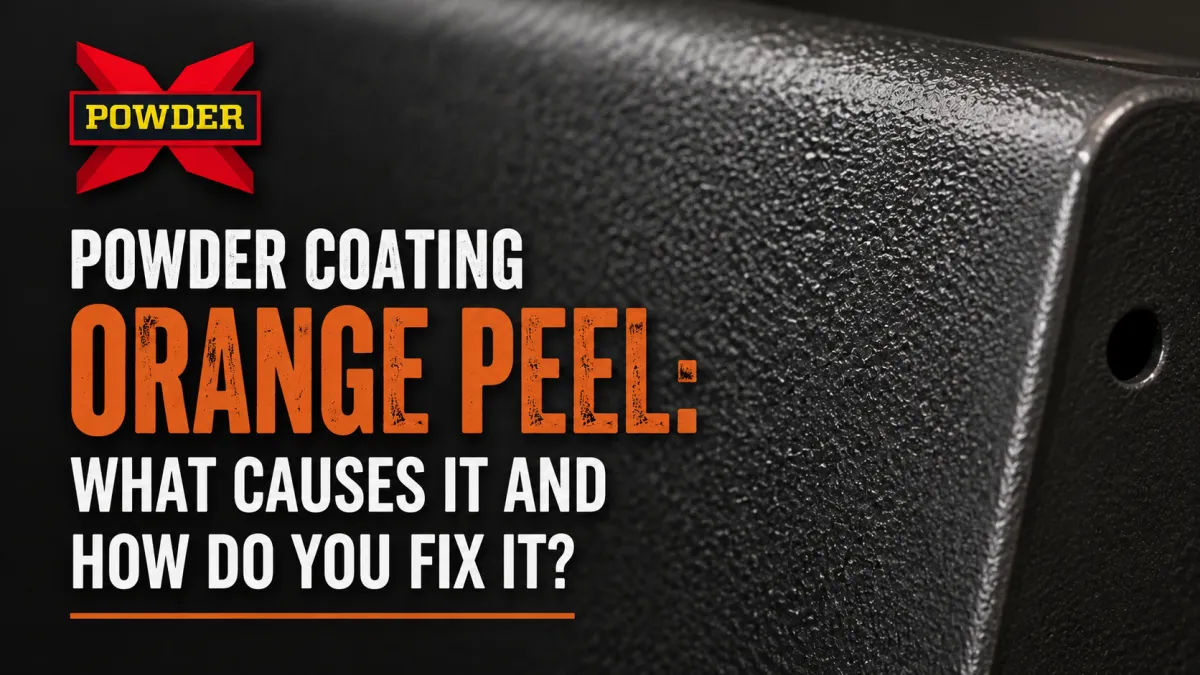
Orange peel in powder coating is a textured, uneven surface that develops instead of the smooth finish you were expecting. A slight amount of texture can be normal with certain powders, but excessive orange peel usually tells you something in your process needs attention.
And before you start changing five different things at once, start with one of the most common causes:
You may simply be putting too much powder on the part.
What Causes Orange Peel in Powder Coating?
Powder coating is pretty forgiving, but more powder does not automatically mean a better finish.
Think about painting a wall. Too little material and you get poor, uneven coverage. Put way too much on and you create another set of problems.
Powder works the same way.
Your powder supplier provides a Technical Data Sheet (TDS) that includes the recommended film thickness and curing requirements for that specific product. Those numbers aren't suggestions somebody threw onto a piece of paper. They're where your troubleshooting should begin.
1. Your Film Build Is Too Heavy
This should be one of the first things you check.
When too much powder is applied, the coating can have difficulty flowing into the smooth finish you're trying to achieve. Excessive film thickness is one of the most common causes of orange peel.
And this becomes even more important when you're applying multiple coats.
Primer plus color. Color plus clear. Base coat plus a specialty finish.
Every coat adds film thickness. Keep piling it on and eventually you're going to create problems. Orange peel and back ionization can become especially troublesome in a two-coat process.
The fix: Stop guessing and measure your coating thickness. Compare it with the powder manufacturer's recommended film build.
2. Check Your Powder Gun Settings
Your powder gun isn't just an ON/OFF switch.
Voltage, microamps and powder flow all affect how powder gets onto the part. Excessive electrical charge can also contribute to back ionization and finish-quality problems.
The answer isn't to memorize one magical gun setting and use it on everything. Different parts and different situations require adjustments.
The fix: Make sure your voltage, microamps and powder flow are appropriate for the part you're coating. If you're fighting the gun to get powder onto the part, don't automatically compensate by dumping more powder at it.
Find the reason.
3. Watch Your Gun-to-Part Distance
Sometimes orange peel starts with something as simple as getting too close.
At Powder-X, we generally teach maintaining a minimum gun-to-part distance of roughly 10 to 12 inches during normal application. Getting too close can contribute to excessive or uneven buildup.
Slow down. Use smooth, controlled passes and let the gun do the work.
You don't need to bury the part in powder.
4. Don't Coat the Part Hot
This is one of those powder coating practices that gets passed around online until people assume it's the way things are supposed to be done.
For normal application, coat the part at ambient temperature.
When you apply powder to a hot part, the powder can begin melting or flowing as you're spraying it. That makes controlling film thickness much more difficult and can create an inconsistent finish.
The fix: If you've heated the part, allow it to cool before coating it.
Control is your friend.
5. Understand the Powder You're Spraying
Not every powder flows exactly the same.
Different powder chemistries and formulations can produce different appearances. For example, TGIC-free polyester powders can have a tendency to show more orange peel at heavier film builds.
That doesn't mean something is necessarily wrong with the powder.
It means you need to understand what you're spraying.
The fix: Read the TDS, understand the recommended film thickness and talk with your powder manufacturer when you're unsure about the expected finish.
How Do You Prevent Powder Coating Orange Peel?
Don't overcomplicate it.
Start with the fundamentals:
Follow the powder manufacturer's TDS.
Measure your film thickness instead of guessing.
Set your powder gun correctly.
Maintain proper gun-to-part distance.
Spray with smooth, controlled passes.
Coat parts at ambient temperature.
Pay extra attention to total film build when applying multiple coats.
The application itself isn't supposed to be a wrestling match.
When the equipment is properly set up, the part is properly grounded and your application technique is correct, let the gun do the work.
Don't Fix Orange Peel by Guessing
This is where good powder coaters separate themselves from people who simply know how to pull the trigger.
When something goes wrong, don't immediately change your powder, gun settings, cure schedule and application technique all at once.
You won't know what fixed it.
Look at the process. Measure what you can measure. Start with film thickness. Check your settings. Check your technique. Check the TDS.
Then make one correction at a time.
Because reworking a bad part costs a whole lot more than taking another minute to coat it correctly the first time.
And that's really the goal.
Better process. Better finish. Less rework. More profit.
Ready To Give Your Powder Coating Business The Head Start It Deserves?
Whether you are just starting out in the world of powder coating, or a seasoned professional looking to expand your system, Powder-X can help you build and choose a system that will reach and exceed your goals.
From ovens and booths to complete systems, training, technical support, and long-term guidance, our team is ready to help you make a smart investment in equipment made to perform.
Contact Powder-X today to speak with one of our experts and start building a powder coating operation with confidence.


