Powder Coating Shop Profitability: 10 Hidden Costs | Powder-X
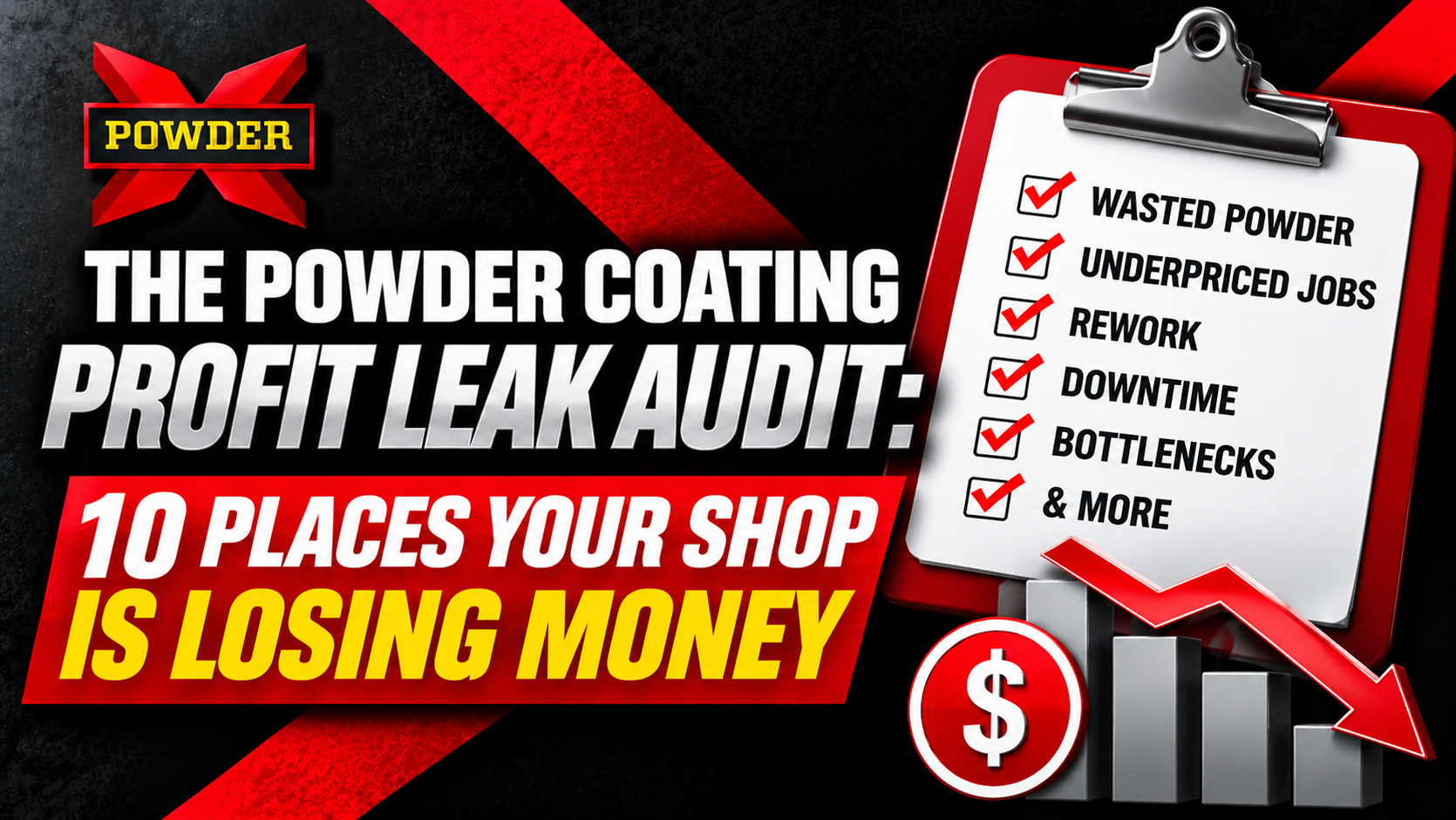
The Powder Coating Profit Leak Audit: 10 Places Your Shop Is Losing Money
A powder coating shop can be busy every day and still struggle to make money.
Parts are coming in. The oven is running. Employees are working. Customers are picking up finished jobs.
But at the end of the month, the profit isn't where it should be.
So where is the money going?
The problem isn't always a lack of customers or low prices. Sometimes, it's the small inefficiencies happening throughout the shop.
A few wasted minutes, a little extra powder and an occasional rejected part might not seem expensive. But repeated every day, those losses add up.
At Powder-X, the focus is on helping powder coating businesses build efficient, repeatable operations that turn production into profit.
Here are 10 places worth auditing.
1. Wasted Powder
Not every pound of powder purchased ends up on a finished part.
Overspray, poor transfer efficiency, excessive film thickness and improper reclaim practices can all increase material costs.
What to check: Compare powder purchased and consumed against the number of acceptable parts produced.
Improving gun settings, grounding and application techniques can help reduce unnecessary powder consumption.
2. Underpriced Jobs
One of the fastest ways to lose money is quoting jobs without understanding their actual cost.
A price might cover powder and labor but overlook preparation, handling, oven operation, overhead and rework.
What to check: Calculate the true cost per part, including direct costs and a reasonable allocation of overhead.
A full schedule doesn't help if the jobs aren't priced to generate profit.
3. Rework and Rejected Parts
Every rejected part costs more than the original coating.
The shop may need to strip the finish, prepare the surface again, reapply powder and run another cure cycle.
That consumes labor, materials and production capacity.
What to check: Track rejected parts, identify the most common defects and calculate the cost of correcting them.
The cheapest rework is the rework that never happens.
4. Poor Racking and Part Handling
Hooks and racks might seem like small details, but they directly affect production efficiency.
Poorly designed racks can limit oven capacity, increase handling time and create grounding problems.
Parts that require unnecessary repositioning also slow down the process.
What to check: Evaluate how many acceptable parts fit on each rack and how much labor is required to load, move and unload them.
Better racking can improve throughput without requiring a larger oven.
5. Unnecessary Oven Cycles
A curing oven consumes energy and production time whether it's fully loaded or nearly empty.
Poor scheduling, inconsistent loading and unnecessary reheating can increase operating costs.
But overcrowding an oven can create its own curing problems.
What to check: Track oven cycles, load utilization and energy use while maintaining proper airflow and verified cure conditions.
The goal is to make each cycle productive—not simply pack in more parts.
6. Production Bottlenecks
A shop can have a powerful oven and an efficient spray booth but still struggle to finish jobs on time.
Why?
Because production moves only as fast as the slowest step.
Surface preparation, loading, curing, cooling or inspection may be limiting the entire operation.
What to check: Measure how long parts spend at each stage, including time spent waiting.
Fixing the actual bottleneck often delivers more value than upgrading equipment that isn't causing the delay.
7. Excessive Setup and Color Changes
Switching between colors and job types takes time.
The booth may need cleaning, equipment may need adjustment, and operators may have to prepare new racks or powder supplies.
Frequent changeovers can reduce the number of parts completed each day.
What to check: Record setup and color-change time, then look for opportunities to group compatible jobs.
Better scheduling can recover productive hours without sacrificing quality.
8. Equipment Downtime
A clogged filter, inconsistent powder feed or neglected maintenance issue can stop production unexpectedly.
Even a short interruption can affect delivery schedules and labor efficiency.
What to check: Track downtime by cause and establish preventive maintenance procedures for the booth, gun, compressed air system and oven.
Regular maintenance is usually easier to manage than an unexpected breakdown during a major order.
9. Inefficient Labor
Labor costs increase when employees spend too much time searching for parts, moving racks, waiting for equipment or correcting avoidable mistakes.
The issue isn't necessarily how fast employees work.
Sometimes, the process itself is slowing them down.
What to check: Observe the workflow and identify unnecessary movement, repeated handling and waiting time.
A better shop layout and standardized procedures can help employees produce more acceptable parts in the same amount of time.
10. Taking the Wrong Jobs
Not every powder coating job is worth accepting.
Some jobs require extensive preparation, complicated masking, unusual handling or production interruptions that aren't reflected in the quoted price.
Others may tie up equipment while more profitable work waits.
What to check: Review profitability by job type, not just total sales.
A smaller, repeatable production order may generate more profit than a large, complicated one-off project.
More revenue doesn't always mean more money in the bank.
How to Run a Simple Powder Coating Profit Audit
A profit audit doesn't need to be complicated.
Start by reviewing recent jobs and recording five numbers: actual cost per acceptable part, powder consumption, labor hours, rework cost and completed parts per production hour.
Then compare those results with the original estimates.
Look for patterns.
Are certain jobs consistently taking longer than quoted? Is one coating process producing more rejects? Are frequent color changes reducing daily output?
Focus on the biggest measurable loss first.
Correct the issue, track the results and move to the next opportunity.
Small improvements become valuable when they're repeated across every job.
The Powder-X Takeaway
Powder coating profitability isn't determined by how many hours the oven runs or how many jobs are on the schedule.
It's determined by how efficiently the shop turns materials, labor and equipment time into acceptable finished parts.
Wasted powder, poor pricing, rework, bottlenecks and unnecessary downtime can quietly reduce profit even when business is strong.
Powder-X emphasizes building coating operations around consistent quality, efficient equipment use and repeatable production processes.
The most profitable powder coating shops aren't always the busiest. They're the ones that understand where their money goes—and know how to keep more of it.
Before investing in more equipment or chasing more customers, find out how much profit the existing operation may already be leaving behind.
Ready To Build A Powder Coating System The Right Way?
Whether you are starting your first powder coating business, bringing finishing in-house, or upgrading an existing operation, Powder-X can help you choose a batch system built around your goals.
From ovens and booths to complete systems, training, technical support, and long-term guidance, our team is here to help you make a smart investment in equipment that is designed to perform.
Contact Powder-X today to speak with one of our coating specialists and start building a powder coating operation with confidence


