Powder Coating System Compliance: Installation Guide | Powder-X
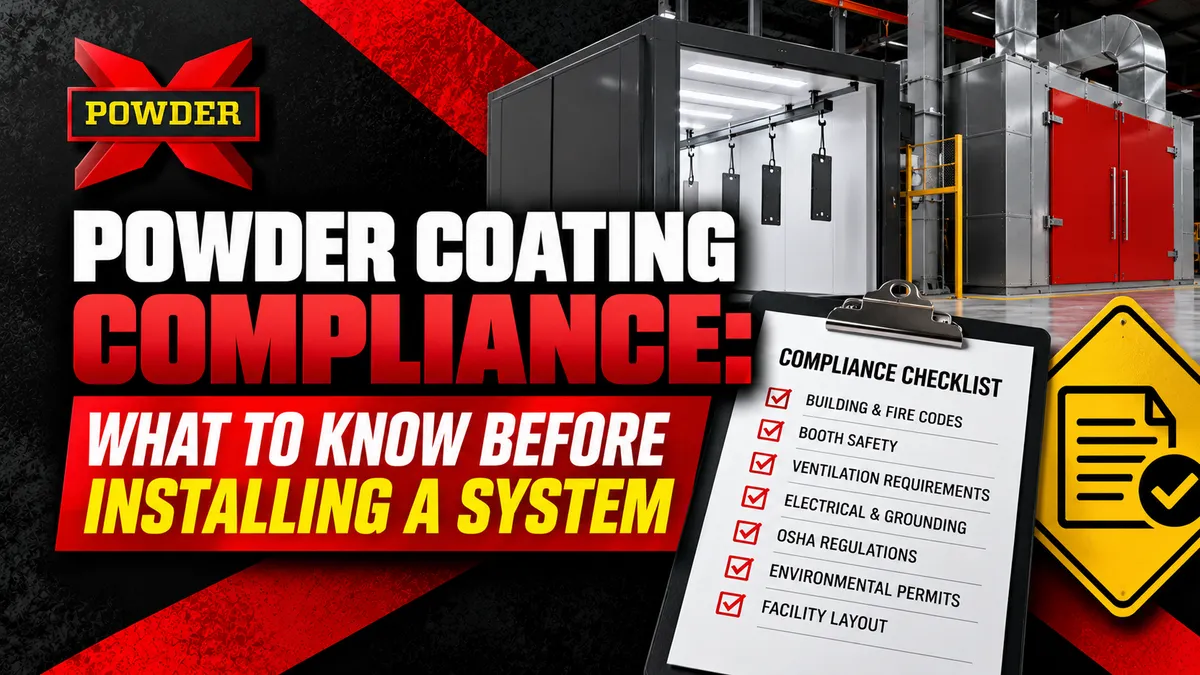
Powder Coating Compliance: What to Know Before Installing a System
Installing a powder coating system is an exciting step for any business. Whether it's a small batch operation or a full production line, bringing powder coating in-house can provide greater control over quality, scheduling and production costs.
But before the equipment arrives, there's something important to consider.
Is the facility actually ready for a powder coating system?
Powder coating involves electrical equipment, airborne combustible powder, ventilation, curing ovens and material handling. Each part of the process comes with safety and compliance considerations.
At Powder-X, the focus is on helping businesses build complete powder coating operations—not simply finding a place to put an oven and spray booth.
A successful installation starts with understanding the requirements before equipment is purchased.
1. Start With Local Building and Fire Requirements
One of the first steps is contacting the local building and fire authorities.
Depending on the facility and installation, a powder coating operation may require permits, equipment inspections or approval of its layout and fire-protection systems.
Requirements can vary based on the location, building classification, equipment configuration and materials being used.
For example, installing a powder coating booth inside an existing manufacturing facility may involve different considerations than constructing a dedicated coating shop.
What to do: Discuss the proposed installation with the local authority having jurisdiction (AHJ) before finalizing equipment placement.
That helps identify requirements early, rather than discovering them after the equipment is already installed.
2. Understand Powder Coating Booth Safety
A powder coating booth does more than contain overspray.
It's part of the operation's safety and ventilation system.
Airborne powder can create combustible dust hazards under certain conditions, which makes proper booth design, ventilation, electrical equipment selection and housekeeping especially important.
In the United States, NFPA 33 is a key standard covering spray application processes using flammable or combustible materials. Other standards and regulations may apply depending on the installation.
What to do: Choose equipment designed for its intended application and have the complete installation reviewed against applicable fire and electrical requirements.
Avoid assuming that an ordinary room with an exhaust fan can serve as a compliant powder coating booth.
3. Don't Overlook Electrical and Grounding Requirements
Powder coating uses electrostatic charging to help powder deposit on metal parts.
That makes grounding an important part of both application quality and electrical safety.
Spray equipment, booths, workpieces and other components must be properly bonded or grounded as required by applicable standards and equipment instructions.
Certain areas may also require electrical equipment suitable for the hazards present.
What to do: Have a qualified electrical professional evaluate the system's power requirements, grounding and applicable electrical classifications.
Good grounding helps support a safer operation and a more consistent coating process.
4. Plan for Oven Installation and Ventilation
A powder coating curing oven isn't simply a large heated box.
It must be installed with appropriate clearances, ventilation, controls and safety provisions.
Fuel-fired ovens also introduce combustion and fuel-supply considerations.
NFPA 86 is an important U.S. standard addressing ovens and furnaces, although the applicable requirements depend on the equipment and installation.
What to do: Review the oven manufacturer's installation requirements and have qualified professionals evaluate fuel, electrical, exhaust and fire-safety provisions.
The oven also needs enough surrounding space for safe loading, unloading and maintenance.
5. Consider OSHA and Employee Safety
Powder coating shops must also consider workplace safety.
Potential concerns include airborne powder exposure, electrical hazards, hot surfaces, moving equipment and chemical exposure during pretreatment.
Depending on the operation, OSHA requirements may involve ventilation, hazard communication, personal protective equipment, respiratory protection and employee training.
Employees should understand the equipment they're using and the hazards associated with the materials involved.
What to do: Review the applicable Safety Data Sheets (SDS), establish safe operating procedures and provide appropriate employee training and protective equipment.
If respirators are required, OSHA's respiratory protection requirements may also apply.
6. Check Environmental Requirements Before Installation
Powder coating is often chosen partly because conventional powder systems generally contain little or no solvent.
But that doesn't mean every powder coating operation is automatically exempt from environmental requirements.
Air emissions, powder collection, waste handling, pretreatment chemicals and wastewater may all need consideration.
A shop using chemical pretreatment or washing processes may have additional obligations involving water discharge or waste management.
Requirements vary by jurisdiction and process.
What to do: Contact the appropriate state or local environmental agency to determine whether permits, registrations or other approvals are needed.
It's much easier to plan for environmental requirements before installing the system than to redesign the process afterward.
7. Make Sure the Shop Layout Supports Compliance
A powder coating system needs more than enough floor space for the equipment itself.
The layout should account for material movement, ventilation, maintenance access, emergency exits and safe separation of operations.
For example, grinding and blasting activities can introduce dust and contamination into the coating area.
Poorly planned traffic patterns can also create unnecessary handling hazards.
What to do: Design the facility around the complete coating process, including preparation, spraying, curing, cooling and finished-part handling.
A well-planned layout can improve safety, coating quality and production efficiency at the same time.
8. Training and Maintenance Matter After Installation
Compliance doesn't end when the equipment passes its initial inspection.
Filters need maintenance. Grounding connections need attention. Safety controls must remain functional, and employees need to follow established procedures.
Changes to equipment, materials or production volume may also require additional review.
What to do: Establish a preventive maintenance schedule, keep relevant inspection and training records, and periodically review the operation's safety procedures.
A properly installed system is only the starting point.
Keeping it operating safely is an ongoing responsibility.
The Powder-X Takeaway
Installing a powder coating system involves more than selecting an oven, booth and powder gun.
Building and fire requirements, electrical safety, ventilation, employee protection and environmental considerations all play a role.
The specific requirements depend on the facility, equipment and location, so early coordination with qualified professionals and local authorities is essential.
Powder-X emphasizes planning the entire coating process before equipment is installed. The right system should fit the work being performed, the available facility and the applicable safety requirements.
The best time to address compliance isn't after the equipment arrives. It's before the installation begins.
Planning ahead helps businesses avoid costly changes, unnecessary delays and production problems—while creating a stronger foundation for future growth.
This article provides general U.S.-focused compliance guidance, not a determination that any specific installation meets legal or code requirements. Applicable standards and adopted editions should be confirmed with the local authorities and qualified professionals.
Useful Regulatory References
For the published article, these primary sources provide useful background without relying on competing equipment manufacturers:
OSHA 29 CFR 1910.107 — Spray Finishing: includes specific powder coating provisions covering ventilation, ignition sources, grounding and housekeeping.
Occupational Safety and Health Administration
Texas Commission on Environmental Quality — Powder Coating Facilities: illustrates how environmental authorization requirements can vary by state.
TCEQ
These are background references, not a complete compliance checklist for a particular facility.
Ready To Build A Powder Coating System The Right Way?
Whether you are starting your first powder coating business, bringing finishing in-house, or upgrading an existing operation, Powder-X can help you choose a batch system built around your goals.
From ovens and booths to complete systems, training, technical support, and long-term guidance, our team is here to help you make a smart investment in equipment that is designed to perform.
Contact Powder-X today to speak with one of our coating specialists and start building a powder coating operation with confidence


