Powder Coating System Utility Requirements | Powder-X
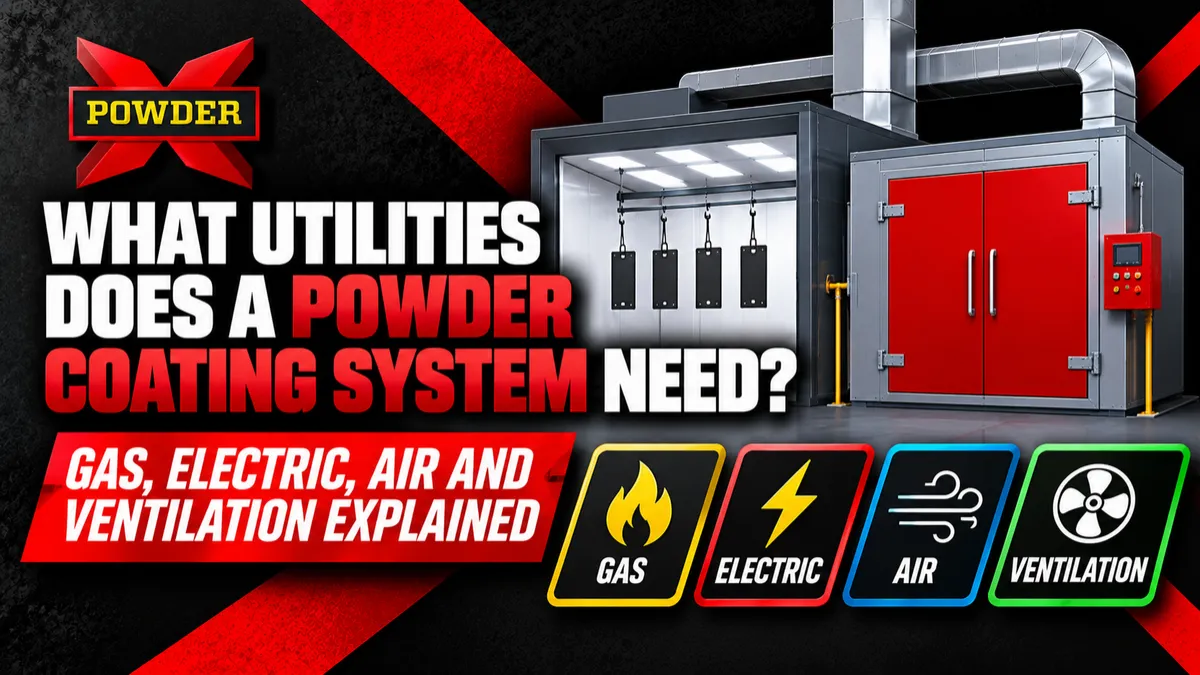
What Utilities Does a Powder Coating System Need? Gas, Electric, Air and Ventilation Explained
Buying a powder coating system is a big step. But before the oven, spray booth and powder gun arrive, there's an important question every shop owner needs to answer.
Can the building actually support the equipment?
A powder coating system needs more than floor space. Depending on the equipment, it may require natural gas, electrical power, compressed air and properly designed ventilation.
Overlooking these requirements can lead to installation delays, unexpected expenses and equipment that can't operate at full capacity.
At Powder-X, the focus is on helping businesses plan the entire powder coating operation—not just choose the equipment.
1. Natural Gas: Powering the Curing Oven
Many industrial powder coating ovens use natural gas or propane to generate the heat needed to cure powder coating.
Gas-fired ovens can be a practical option for larger operations, but the building must have an adequate fuel supply.
A gas line that's sufficient for existing equipment may not have enough capacity for an additional curing oven.
Before installation, it's important to confirm the oven's required fuel type, gas pressure and maximum input rating.
What to check: Verify available gas capacity, regulator requirements and piping specifications with the equipment manufacturer, gas utility and a qualified installer.
Not every powder coating oven uses gas. Electric ovens are another option, particularly for certain batch systems.
2. Electrical Power: More Than Just Plugging In a Machine
Powder coating systems use electricity for more than the powder gun.
Depending on the setup, electrical power may be required for the curing oven, booth exhaust fans, air circulation motors, control panels, lighting and conveyor equipment.
Some systems operate on single-phase power, while larger industrial equipment may require three-phase service.
Voltage, amperage and available electrical capacity all matter.
What to check: Have a qualified electrician review the equipment's electrical specifications and the building's available service before installation.
An electrical panel with open breaker spaces doesn't necessarily mean the facility has enough capacity to operate the system.
3. Compressed Air: Keeping Powder Flowing Properly
Compressed air plays a major role in powder coating application.
The powder gun uses controlled airflow to transport and deliver powder to the part. Depending on the equipment, compressed air may also support powder fluidization, cleaning functions and other operations.
But compressed air needs to be more than available.
It needs to be clean, dry and supplied at the correct pressure and flow rate.
Moisture or oil contamination can cause inconsistent powder flow, gun problems and finish defects.
An undersized compressor can also struggle to maintain pressure during continuous operation.
What to check: Confirm the equipment's required air pressure, flow capacity and air-quality specifications. Include appropriate filtration, moisture removal and air treatment.
A reliable compressed air system helps support consistent coating quality.
4. Ventilation: A Critical Part of the Spray Booth
Powder coating booths need properly designed airflow to capture overspray and control airborne powder.
That means ventilation isn't simply an optional accessory.
The booth's exhaust and filtration system must be sized for its design and intended operation.
Insufficient airflow can allow powder to escape the spray area, while improper airflow patterns can interfere with application and powder collection.
Depending on the booth design, filtered air may be returned to the facility or exhausted outdoors, subject to applicable requirements.
What to check: Verify booth airflow specifications, filtration, exhaust routing and any required makeup air with the equipment manufacturer and local authorities.
The ventilation system also needs to meet applicable fire, electrical and workplace safety requirements.
5. Don't Forget Oven Exhaust and Makeup Air
The spray booth isn't the only equipment that may require ventilation.
Curing ovens can have separate exhaust requirements for process emissions, combustion products and safe operation.
Fuel-fired ovens also require appropriate combustion air and properly designed fuel and safety systems.
When large amounts of air leave a building, replacement air may be needed to maintain proper building pressure and equipment performance.
Without adequate makeup air, a facility can experience pressure problems that affect ventilation and other equipment.
What to check: Review the oven's installation requirements and have qualified professionals evaluate exhaust, combustion air and makeup air needs.
Booth exhaust and oven ventilation serve different purposes and should not be treated as interchangeable systems.
6. Why Utility Planning Matters Before Buying Equipment
A powder coating system might fit perfectly inside a building but still require expensive utility upgrades.
For example, a shop may discover that its electrical service needs expansion, the gas supply is undersized or the compressor cannot support continuous spraying.
Those upgrades can affect the total installation budget and project timeline.
That's why utility planning should happen before equipment selection is finalized.
The right powder coating system isn't just one that fits the production needs. It also needs to work with the facility's available infrastructure.
The Powder-X Takeaway
A successful powder coating installation starts with understanding what the equipment needs to operate.
Gas or electricity provides curing heat. Electrical power operates motors and controls. Clean, dry compressed air supports powder application. Proper ventilation manages airflow and helps maintain a safe working environment.
Each utility affects equipment performance, installation costs and long-term reliability.
Powder-X emphasizes looking at the complete system before installation, including the building, utilities and production requirements.
Before choosing a powder coating system, make sure the facility is ready to power it.
A little planning upfront can prevent expensive surprises and help the operation start producing quality finishes sooner.
Ready To Build A Powder Coating System The Right Way?
Whether you are starting your first powder coating business, bringing finishing in-house, or upgrading an existing operation, Powder-X can help you choose a batch system built around your goals.
From ovens and booths to complete systems, training, technical support, and long-term guidance, our team is here to help you make a smart investment in equipment that is designed to perform.
Contact Powder-X todayto speak with one of our coating specialists and start building a powder coating operation with confidence.


