
Tiny Bumps in Powder Coating? Causes & Fixes | Powder-X
Why Does My Powder Coating Have Tiny Bumps? Contamination, Dirt and Finish Defects Explained
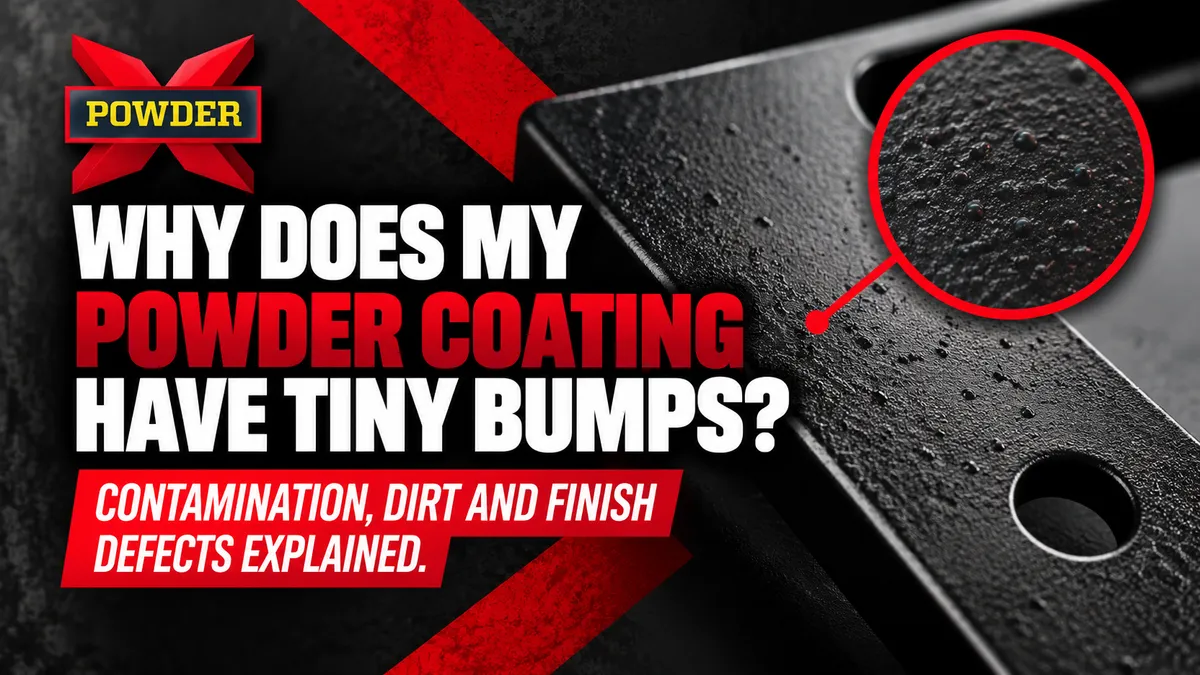
A freshly powder-coated part comes out of the oven looking great—until the light hits it at the right angle.
Suddenly, there are tiny bumps scattered across the finish.
Some feel like grains of sand. Others look like little raised dots. And sometimes, the surface feels rough even though the coating appears smooth from a distance.
So what happened?
At Powder-X, the first step is understanding that not every bump is caused by the same problem. Contamination, airborne dirt, powder clumps and application issues can all create similar-looking defects.
The good news? Once the source is identified, many of these problems can be prevented.
What Causes Tiny Bumps in Powder Coating?
Tiny bumps generally indicate that something has disrupted the coating's smooth finish.
That might be a foreign particle trapped in the powder, contamination on the metal or an issue with how the powder was applied and cured.
The appearance of the bump can offer clues.
A hard, raised speck may point toward dirt or debris. A small crater with a raised edge may suggest contamination or outgassing. A uniformly rough texture may indicate an application or flow problem.
The key is to identify the type of defect before changing equipment settings.
1. Dust and Dirt in the Powder Coating Booth
One of the most common causes of isolated bumps is airborne contamination.
Dust from grinding, sweeping, blasting or nearby manufacturing activities can settle on a part before or during powder application.
Once the part enters the oven, those particles can become trapped in the finish.
Even a clean-looking booth can have contamination problems if dirty parts, racks or clothing are regularly introduced into the coating area.
How to fix it: Keep grinding and blasting dust away from the coating area. Maintain the booth and filters, clean surrounding surfaces appropriately and inspect parts before spraying. Avoid cleaning methods that stir dust into the air.
2. Dirty or Improperly Prepared Metal
Sometimes the problem starts before the part reaches the booth.
Small particles of blasting media, metal shavings, dried chemical residue or other debris can remain on the substrate.
When powder is applied over those contaminants, the finished coating may develop raised spots or other surface defects.
This is why Powder-X places so much emphasis on proper surface preparation.
How to fix it: Inspect parts after cleaning and pretreatment. Make sure blasting residue, loose particles and cleaning chemicals have been properly removed, and that the parts are fully dry before coating.
A clean finish starts with clean metal.
3. Contaminated Powder or Powder Clumps
Powder coating material needs to be stored and handled correctly.
If powder is exposed to moisture, excessive heat or contamination, its handling and application characteristics can change.
Clumps or foreign particles in the powder supply may contribute to visible finish defects.
This can also happen when leftover powder is improperly handled or when equipment isn't cleaned thoroughly between products.
How to fix it: Follow the powder manufacturer's storage recommendations. Keep containers sealed when not in use, inspect questionable powder and maintain clean feed equipment. Use appropriate screening or sieving procedures where recommended by the powder supplier.
4. Oil, Silicone and Other Surface Contaminants
Not all contamination looks like dirt.
Oil, grease, silicone and similar substances can interfere with the way powder flows across the surface during curing.
Instead of a simple raised speck, these contaminants may create fisheyes or craters—small circular defects where the coating pulls away from an area.
Silicone contamination can be particularly frustrating because even small amounts may affect coating appearance.
How to fix it: Keep incompatible lubricants, sprays and cleaning products away from preparation and coating areas. Verify that cleaning procedures remove oils and residues before powder application.
5. Moisture or Oil in Compressed Air
Compressed air plays an important role in powder coating.
But if that air contains moisture or oil, it can introduce contamination into the application process.
The result may include inconsistent powder flow, surface defects or other coating problems.
Powder-X emphasizes clean, dry compressed air because application quality depends on more than the powder gun itself.
How to fix it: Inspect the air-treatment system, drains, filters and dryers. Verify that the compressed-air quality meets the application equipment and powder manufacturer's requirements.
6. Outgassing From the Metal
Some bumps aren't caused by dirt at all.
Castings, porous metal and previously contaminated parts can release trapped gases or vapors as they heat.
If that release occurs while the powder is melting and curing, it may leave pinholes, bubbles or small raised defects.
This is known as outgassing.
It can be especially common with certain cast parts or previously used components.
How to fix it: Identify whether the substrate is prone to outgassing. Where appropriate, use a validated pre-bake or outgassing procedure before final preparation and coating. An outgassing-forgiving powder may also help in suitable applications.
7. Excessive Film Thickness or Poor Powder Flow
Sometimes a rough finish isn't contamination.
Applying too much powder, using unsuitable application settings or curing outside the powder's specified conditions can affect how smoothly the coating flows.
This may create an orange-peel appearance—a textured surface resembling the skin of an orange.
Unlike isolated dirt bumps, orange peel generally affects a broader area of the coating.
How to fix it: Check the applied film thickness, powder manufacturer's Technical Data Sheet, gun settings and verified cure conditions.
Don't assume that applying more powder will produce a smoother finish.
How to Tell Dirt Bumps From Other Powder Coating Defects
What the finish looks like | Possible cause |
|---|---|
Random hard, raised specks | Dust, dirt or foreign particles |
Small circular craters | Oil, silicone or other contamination |
Tiny pinholes or bubbles | Outgassing or trapped volatiles |
Rough texture across a large area | Orange peel, film build or flow issues |
Repeating defects in the same location | Part preparation, racking or localized contamination |
These are starting points, not definitive diagnoses. Different problems can create similar appearances.
How to Troubleshoot Tiny Bumps Without Guessing
When bumps begin appearing, changing multiple settings at once can make the problem harder to identify.
Start by asking where the defect is showing up.
Does it affect every part or only certain substrates? Does it appear with one powder or several? Did the problem begin after a color change, maintenance work or a change in preparation?
Inspect the parts before coating, check the powder supply and verify the condition of the booth and compressed air.
If the problem continues, examine a representative defect closely. A particle trapped inside the coating points toward a different cause than a crater or pinhole.
Change one variable at a time and document the results.
That approach helps turn a frustrating defect into a repeatable solution.
The Powder-X Takeaway
Tiny bumps in powder coating can come from several sources, but the solution usually begins with the fundamentals.
Clean parts. Clean powder. Clean, dry compressed air. Proper booth maintenance. Controlled application. Verified curing.
And when a defect appears, identify what it actually is before trying to fix it.
A dirt particle, an outgassing pinhole and an orange-peel texture may all make a finish look rough, but they don't have the same solution.
The best way to eliminate powder coating defects isn't to keep adjusting the gun. It's to find out what's creating the defect in the first place.
Ready To Build A Powder Coating System The Right Way?
Whether you are starting your first powder coating business, bringing finishing in-house, or upgrading an existing operation, Powder-X can help you choose a batch system built around your goals.
From ovens and booths to complete systems, training, technical support, and long-term guidance, our team is here to help you make a smart investment in equipment that is designed to perform.
Contact Powder-X today to speak with one of our coating specialists and start building a powder coating operation with confidence.


