What Makes a Powder Coating Oven Legal? The Critical Features That Protect Your Business
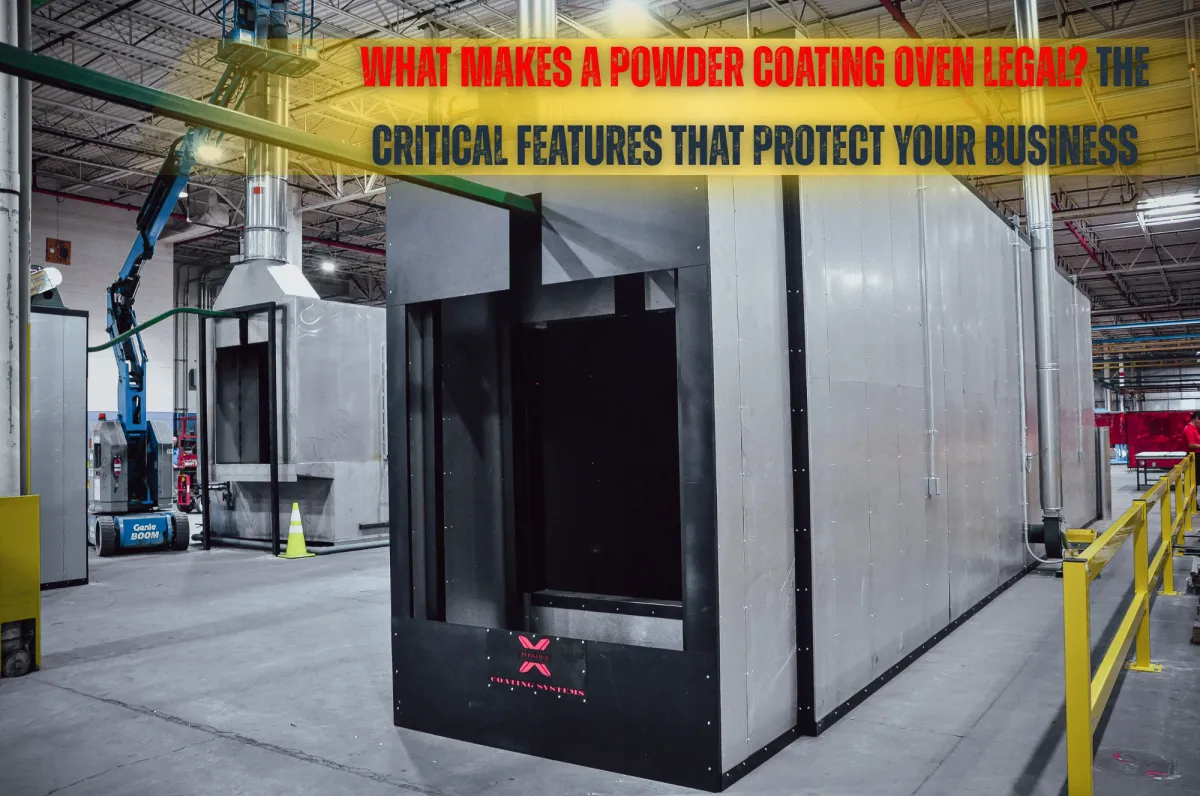
What Makes a Powder Coating Oven Legal? The Critical Features That Protect Your Business
Not every oven that cures powder coating is actually a legal powder coating oven.
At first glance, two ovens might look nearly identical. They may heat parts to the same temperature, cure powder, and even produce similar finishes. But when it comes to OSHA compliance, fire codes, insurance requirements, and long-term liability, appearances can be deceiving.
If you're investing in powder coating equipment, understanding what separates a true powder coating oven from a generic industrial oven isn't just a technical detail—it's a business decision that can save you from costly mistakes.
The Biggest Misconception in Powder Coating
One of the most common misconceptions in the industry is that any heated enclosure can be used as a powder coating oven.
Unfortunately, that's simply not true.
A legal powder coating oven must be engineered with specific safety features that account for the potential presence of combustible vapors during the curing process. Even though most powder coatings contain little to no solvent, safety standards are written with conservative assumptions to protect operators, facilities, and businesses.
That means equipment must be designed to safely manage worst-case scenarios—not just normal operating conditions.
The Three Features Every Legal Powder Coating Oven Needs
While exact requirements depend on your local authority having jurisdiction (AHJ), a properly designed powder coating oven should include several critical safety systems.
1. Recirculation Fan
A recirculation fan keeps heated air moving evenly throughout the oven.
This does more than improve cure consistency.
Proper air circulation helps eliminate hot and cold spots, improves efficiency, and is an essential component of many compliant powder coating oven designs.
Without proper air movement, temperature variations can negatively impact coating quality while also failing to meet expected engineering standards.
2. Exhaust Fan
A powder coating oven should also include an exhaust system designed to safely remove airborne contaminants and maintain proper airflow.
Safety codes assume the possibility of combustible vapors under certain conditions. The exhaust system is designed to prevent the accumulation of those vapors and help maintain a safe operating environment.
This isn't an optional upgrade—it's one of the fundamental differences between an industrial oven and a properly engineered powder coating oven.
3. Blow-Out (Pressure Relief) Doors
Perhaps the least understood safety feature is the pressure relief system.
A legal powder coating oven should have doors or panels designed to relieve pressure in the unlikely event of an internal ignition.
Rather than allowing pressure to build inside the oven, these engineered components are designed to open in a controlled manner, helping reduce the potential for catastrophic damage.
It's a feature most people never think about—until inspectors or insurance companies ask about it.
Why This Matters More Than Ever
In recent years, the powder coating industry has seen an increase in low-cost, "backyard-built" ovens being marketed online.
Many of these units are sold primarily on price.
The problem?
Price doesn't determine compliance.
As awareness of safety requirements has increased, some sellers have even stopped referring to their products as powder coating ovens altogether. Instead, they're marketed simply as industrial ovens or listed only by their dimensions.
That distinction matters because calling something a powder coating oven carries expectations about how it was designed and what safety standards it meets.
The Hidden Cost of Buying Cheap
Saving money on equipment often feels like a smart business decision—until unexpected costs begin to appear.
Non-compliant equipment can lead to:
Failed inspections
Delays in facility approvals
Insurance complications
Expensive retrofit requirements
Operational downtime
Potential legal disputes
The lowest purchase price rarely represents the lowest total cost of ownership.
A properly engineered oven is an investment in reliability, compliance, and peace of mind.
Ask the Right Questions Before You Buy
Before purchasing any powder coating oven, don't just ask about size or maximum temperature.
Ask questions like:
Does the oven include a recirculation fan?
Is there an engineered exhaust system?
Does it have pressure relief or blow-out doors?
Was it specifically designed as a powder coating oven?
Can the manufacturer provide documentation supporting the design?
A reputable manufacturer should be able to answer these questions clearly and confidently.
Compliance Is a Competitive Advantage
Regulatory compliance isn't simply about avoiding fines.
It's about protecting your employees, your investment, your customers, and your reputation.
Businesses that invest in properly engineered equipment spend less time solving preventable problems and more time growing their operation.
That's why at Powder-X, we believe buying equipment isn't just about getting a machine—it's about building a coating operation that is safe, efficient, and positioned for long-term success.
When you understand what makes a powder coating oven truly legal, you're making a decision that protects far more than your finish quality.
You're protecting your business.
Ready To Build A Powder Coating System The Right Way?
Whether you are starting your first powder coating business, bringing finishing in-house, or upgrading an existing operation, Powder-X can help you choose a batch system built around your goals.
From ovens and booths to complete systems, training, technical support, and long-term guidance, our team is here to help you make a smart investment in equipment that is designed to perform.
Contact Powder-X today to speak with one of our coating specialists and start building a powder coating operation with confidence.


